

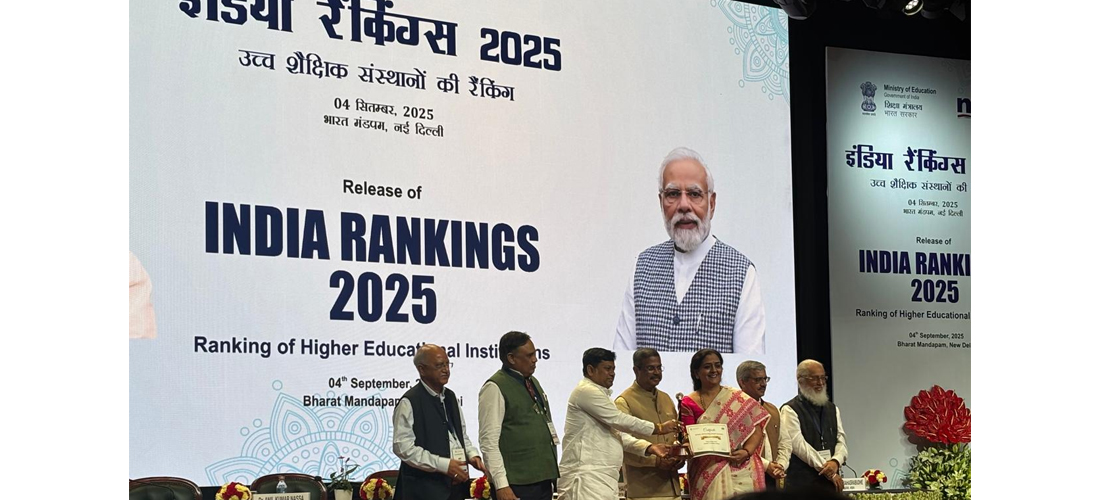
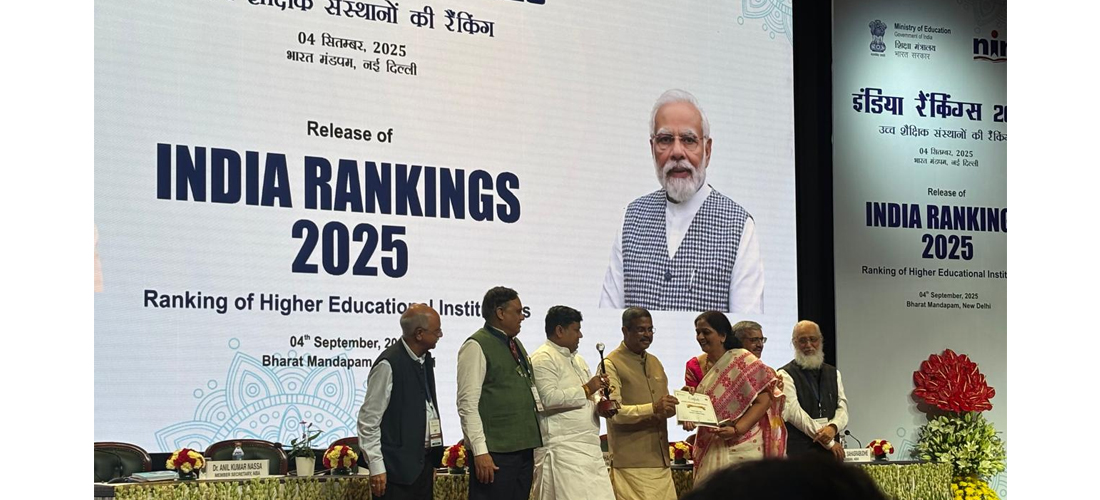
Hindu College is the top-ranked college in the country in the government's NIRF 2025 college ranking, and it is a constituent college of the University of Delhi rather than an institution you apply to at its own gate. That one fact rewires every practical question here: your seat is decided by a CUET score run through Delhi University's central allocation, and the fee is a fixed per-programme figure printed in the college prospectus, not a single lump sum an aggregator can quote. The numbers below are pulled from the college's own pages and the NIRF tables, so you can check each one against its source.
Overview
Hindu College was founded in 1899 by Late Shri Krishna Dassji Gurwale, with prominent citizens of Delhi as its trustees, and it began not on the North Campus but in the crowded lanes of Kinari Bazar in Chandni Chowk, as the college's history page records. It moved in 1908 to a Kashmiri Gate building donated by Rai Bahadur Sultan Singh, shifted its affiliation from Panjab University to the newly formed University of Delhi in 1922, and settled in 1953 into the E-shaped building it still occupies on a 25-acre stretch of the North Campus. Today it is a constituent college of Delhi University holding a NAAC A++ grade in its second assessment cycle, as stated in the college prospectus. Its NIRF 2025 rank of first among all colleges is the headline most searches chase, and the honest answers to the two questions that follow it, how you get in and what it costs, are narrower and more checkable than the listing sites make them sound.
Courses & Fees
Hindu College teaches through 16 departments grouped across commerce, the humanities and the sciences, and the degrees most CUET applicants want are the single-subject honours programmes in those departments. On the undergraduate side the 2026-27 prospectus lists B.A. (Hons) in Economics, English, Hindi, History, Music, Philosophy, Political Science, Sanskrit and Sociology, four B.A. Programme subject pairings, B.Com (Hons), and B.Sc. (Hons) in Botany, Chemistry, Mathematics, Physics, Statistics and Zoology, plus B.Sc. Applied and Physical Sciences streams in Electronics and Chemistry.
Unlike the "total fees" figure aggregators publish, Delhi University fixes the fee per programme and per category, and Hindu College prints the actual first-year table in its prospectus. The tiers below are the real published amounts.
| Programme (first-year fee, 2026-27) | General / OBC / EWS | SC / ST | PwD | Foreign |
|---|---|---|---|---|
| B.A. (Hons) Economics, English, Hindi, History, Philosophy, Political Science, Sanskrit, Sociology | Rs 30,670 | Rs 30,485 | Rs 245 | Rs 57,024 |
| B.A. (Hons) Music | Rs 30,700 | Rs 30,515 | Rs 245 | Rs 57,054 |
| B.A. Programme pairings and B.Com (Hons) | Rs 30,670 | Rs 30,485 | Rs 245 | Rs 57,024 |
| B.Sc. (Hons) Botany, Chemistry, Physics, Zoology (and B.Sc. Applied/Physical Sciences) | Rs 33,320 | Rs 33,135 | Rs 245 | Rs 59,674 |
| B.Sc. (Hons) Mathematics | Rs 31,170 | Rs 30,985 | Rs 245 | Rs 57,524 |
| B.Sc. (Hons) Statistics | Rs 31,470 | Rs 31,285 | Rs 245 | Rs 57,824 |
Postgraduate M.A., M.Com and M.Sc. first-year fees for General category students run from Rs 29,576 to Rs 29,682 in the same prospectus table. Fees are paid through the college's ICICI online payment channel, and the binding number is always the one for your exact programme and category in the current prospectus.
Admissions
You do not apply to Hindu College directly: admission runs entirely through CUET (UG) and Delhi University's Common Seat Allocation System, so you register with the university, sit CUET in your course's subjects and rank Hindu on one DU-wide preference list. What is specific to Hindu is how little room that list leaves. Its 2026-27 prospectus puts the total undergraduate intake at 956 seats, from 68 in B.A. (Hons) Economics and 79 each in B.Com (Hons), B.Sc. (Hons) Physics and B.Sc. (Hons) Chemistry down to 19 in B.A. (Hons) Music, each course split by category under the reservation rules.
Beyond that main CUET route, Hindu fills a limited number of supernumerary places through the university's Extra-Curricular Activities and Sports categories, which run their own trials and certificate scoring, as its admission notice sets out each cycle. Its postgraduate M.A., M.Com and M.Sc. programmes admit through Delhi University's separate PG process.
Cutoff
There is no advance cutoff to clear at Hindu College, and that is the single most misread point about getting in here. CSAS fixes each programme's closing CUET score only when a round's seats are allotted, and because Hindu is the top-ranked college in the framework, its popular courses tend to close at the steepest CUET scores in the university and often stay open into later rounds. Any single "Hindu College cutoff" quoted before a round's list is published is a guess, so track the official CSAS round results as they post rather than a figure lifted from a coaching page.
Placements
Hindu College runs a placement cell it calls Disha and an internship cell called Abhyas, which arrange placements, internships, fellowships and articleships and run sessions on resumes, interviews and domain skills in consulting, finance and marketing. What the college does not publish is an audited placement report with an average or highest package, so any package figure you see on a listing site is unconfirmed, and it means little for a college where many graduates go on to postgraduate study, research, the civil services and other competitive examinations.
The one official outcome signal sits inside the ranking itself: Hindu scores 88.90 on graduation outcomes in the NIRF 2025 college ranking, a measure of how its students complete and progress rather than what they earn. That is the honest number to weigh here, because a recruiter salary table was never the point of a place like this.
Seat Matrix
Rankings
Hindu College's first place is not carried by one figure. In the NIRF 2025 college ranking it scores 84.01 overall, just ahead of Miranda House at 83.20, so the two top colleges in India are both Delhi University colleges. Its five component scores show where the lead comes from.
| NIRF 2025 parameter | Hindu College score |
|---|---|
| Perception | 96.08 |
| Graduation Outcomes | 88.90 |
| Teaching, Learning and Resources | 86.00 |
| Outreach and Inclusivity | 77.35 |
| Research and Professional Practice | 66.92 |
The shape is strong and deliberately lopsided: perception and graduation outcomes sit near the top of the scale and carry the total, while research and professional practice is the lowest of the five, the profile you expect of an undergraduate teaching college rather than a research university. This was no one-year spike either, since the college also held first place in NIRF 2024, as its home page records, and India Today's 2026 survey rates it first in the arts and science streams and second in commerce.
Departments
The 16 teaching departments listed on the college's departments page are the real unit of choice at Hindu, because your three or four years are spent inside one of them. The table maps each department to the degrees it runs in the 2026-27 schedule.
| Department | Programmes offered |
|---|---|
| Commerce | B.Com (Hons); M.Com |
| Economics | B.A. (Hons) Economics |
| English | B.A. (Hons) English; M.A. English |
| Hindi | B.A. (Hons) Hindi; M.A. Hindi |
| History | B.A. (Hons) History; M.A. History |
| Philosophy | B.A. (Hons) Philosophy; M.A. Philosophy |
| Political Science | B.A. (Hons) Political Science; M.A. Political Science |
| Sanskrit | B.A. (Hons) Sanskrit; M.A. Sanskrit |
| Sociology | B.A. (Hons) Sociology |
| Botany | B.Sc. (Hons) Botany; M.Sc. Botany |
| Chemistry | B.Sc. (Hons) Chemistry; M.Sc. Chemistry |
| Mathematics | B.Sc. (Hons) Mathematics; M.Sc. Mathematics |
| Physics | B.Sc. (Hons) Physics; M.Sc. Physics |
| Statistics | B.Sc. (Hons) Statistics; M.Sc. Statistics; M.Sc. Operational Research |
| Zoology | B.Sc. (Hons) Zoology; M.Sc. Zoology |
| Environmental Science | Teaches the university's mandatory environmental studies course; no standalone honours in the 2026-27 schedule |
One honours degree sits outside this list: the college also runs B.A. (Hons) Music, which its departments page does not carry as a separate department.
Facilities & Infrastructure
The library is the piece of infrastructure the college puts first, and with reason: opened with the college in 1899, it is among the oldest of Delhi University's college libraries, fully automated and air-conditioned, holding over one lakh books and around 4,000 e-journals with an OPAC, a reserve section, a reading room and eight terminals for internet access, as its library page describes.
Beyond the library, the prospectus records a fully air-conditioned auditorium, an amphitheatre named Utsav, a Students' Centre with a seminar hall, a bank, a computer room and offices for NSS, NCC and counselling, a DBT Star College tag for its science teaching, and a four-storeyed Research Centre of 38,000 square feet housing science and social-science laboratories, a linguistic lab and a media lab.
The college also carries a lively society culture, from the dramatics society Ibtida to a long-running Students' Parliament, listed on its societies page. It sits on the North Campus within walking reach of the Delhi Metro, so the shared university facilities are close by.
Hostel
Residential life is split across two hostels, and rooms are allotted separately from your CUET admission rather than coming attached to the seat.
The Boys' Hostel takes in roughly two hundred undergraduate and postgraduate men across 119 rooms next to the sports complex, with a common room for table tennis, carrom, chess and a separate television room and admission strictly on merit, as its hostel page states; residents vacate by 16 May each year unless their examinations run later.
The Smt. Indu Punj Girls' Hostel houses 156 residents in air-conditioned rooms, with round-the-clock security and CCTV, lift service, floor pantries and laundry, a common dining hall, a badminton court, a medical room, a solar water-heating system, and a fee waiver for residents with disabilities.
Both hostels have limited seats, so confirm the current allotment process on those pages before assuming a room.
Faculty
Teaching at Hindu College is organised strictly by department, and the college publishes individual profiles for each one, from Botany and Chemistry through Economics, English and History to Physics, Statistics and Zoology, every listing marking the member's rank as Professor, Associate Professor or Assistant Professor on its faculty page. What the official pages do not publish is a single consolidated headcount of teaching staff, so any exact faculty number on an aggregator is not something the college itself states. Read the department's own profile page for the subject you want, since a college chosen by its rank is still taught one department at a time.
Notable Alumni
Hindu College's most striking recent alumna is Harini Amarasuriya, who read sociology here from 1991 to 1994 and became Prime Minister of Sri Lanka in 2024. Beyond her, the college names a wall of distinguished alumni in its prospectus, and the documented list spans public life: cricketers Gautam Gambhir and Ajay Jadeja; the actors Arjun Rampal, Ashish Vidyarthi, Tisca Chopra and Tahir Raj Bhasin; the filmmaker and composer Vishal Bhardwaj and the singer Rekha Bhardwaj; the poet Agha Shahid Ali; the economist and politician Subramanian Swamy; Union minister Hardeep Singh Puri; former Comptroller and Auditor General Vinod Rai; and Foreign Secretary Vikram Misri.
The college keeps its own alumni relations portal and runs an alumni interview series through its placement cell, so the network is active rather than nominal. We name only people whose association with the college is documented in reliable public records and stop there, rather than padding the list with unverified names.
News & Articles
College Compare
Contact & Location
Hindu College sits on Sudhir Bose Marg inside the University Enclave on Delhi University's North Campus, a short walk from the Vishwavidyalaya Metro station. The official contact details are below.
| Detail | Information |
|---|---|
| Address | Hindu College, Sudhir Bose Marg, University Enclave, Delhi 110007 |
| Phone | 01127667184, 27667284 |
| principal@hinducollege.org | |
| Campus | North Campus, University of Delhi |
Verified
Approvals & Accreditation
Statutory approvals and accreditation grades from official bodies.
Aid
Scholarships
Decide
Compare with similar colleges
Voices
Student Reviews
Campus
Gallery


Questions
Frequently asked questions
References
Sources
- NIRF 2025 ranking – nirfindia.org
- Official website – hinducollege.ac.in
- documented list – en.wikipedia.org
- alumni relations portal – alumni.hinducollege.ac.in
At a glance
Quick facts
- Established
- 1899
- Affiliation
- University of Delhi
- NIRF 2025 (College)
- Rank #1NIRF· 2025-08-14
- NAAC
- A++, CGPA 3.58
- Website
- hinducollege.ac.in

Expertie Editorial Team
This page is researched and maintained by the Expertie editorial team, and checked against official sources.
Found something that looks wrong? Email us at editorial@expertie.com.
Last updated