

Aligarh Muslim University, Aligarh
Aligarh Muslim University began as a school. On 24 May 1875 the reformer Sir Syed Ahmad Khan opened the Madarsatul Uloom in Aligarh; it grew into the Mohammedan Anglo-Oriental College in 1877 and was raised to a full university by an Act of Parliament in 1920, as the Facts page on amu.ac.in records. Today it is a central university spread across a single residential campus of 467.6 hectares, or 1,155 acres, in the city of Aligarh in western Uttar Pradesh. If you are weighing AMU, three things set it apart from most central universities: it teaches almost every field under one roof, it screens applicants through its own admission tests rather than leaning only on a national exam, and it prints the exact sum payable at admission against every single course it runs.
Overview
The university carries the motto "Taught man what he did not know," a line from the Qur'an that Sir Syed chose for a body he built to modernise education without cutting it off from its roots. That founding idea still shapes the place: AMU runs a fully residential system and draws students from every state and from countries across Africa, West Asia and Southeast Asia. It has long asserted a minority character, a question still before the courts, and it draws a formal line of its own between candidates: the Guide to Admissions 2026-27 counts as "internal" only a candidate who passed the qualifying examination at AMU itself as a regular student, not earlier than three academic years before the course being applied for, and treats everyone else as external. The university is accredited by NAAC at the A+ grade, on a score of 3.35.
The scale is unusual for a single campus, and the numbers below all come from the university's own Facts page.
| At a glance | Figure |
|---|---|
| Type | Central university |
| Established | 1877 (as MAO College); 1920 (as AMU) |
| Campus | 467.6 hectares (1,155 acres), Aligarh, Uttar Pradesh |
| Faculties and departments | 13 faculties, 117 departments |
| Academies and centres | 3 academies, 21 centres and institutes |
| Courses offered | More than 300 |
| Students on rolls | 37,327 |
| Teaching staff | 1,686 |
| Non-teaching staff | 5,610 |
Courses & Fees
AMU spans professional and classical study in a way few universities match. Its engineering degrees sit in the Zakir Husain College of Engineering and Technology, medicine in the Jawaharlal Nehru Medical College, dentistry in the Dr. Ziauddin Ahmad Dental College and Unani medicine in the Ajmal Khan Tibbiya College, while the Faculties of Arts, Science, Commerce, Law, Social Sciences and Theology carry the bulk of the arts-and-sciences programmes.
Fees are where AMU surprises people, and they are not a mystery to be pieced together. Appendix XI of the official Guide to Admissions 2026-27 is a single list of every course of study against the fee payable at the time of admission, and the figures below are lifted from it for the 2026-27 cycle. Read it as the first payment a selected candidate makes, not as tuition alone; a supernumerary self-financing seat in the same course costs a great deal more.
| Course, 2026-27 | Fee payable at the time of admission |
|---|---|
| B.A. (Hons.), most subjects | Rs 11,100 |
| B.Com. (Hons.) | Rs 11,100 |
| B.Tech, Mechanical Engineering | Rs 25,500 |
| B.Tech, Computer Engineering (Artificial Intelligence) | Rs 70,500 |
| B.Arch. | Rs 25,500 |
| B.A.LL.B. | Rs 15,200 |
| Kamil-e-Tib-o-Jarahat (B.U.M.S.) | Rs 15,300 |
| B.D.S. | Rs 48,600 |
| M.B.B.S. | Rs 55,900 |
Applying costs separately from being admitted. Appendix I of the same Guide sets the processing charge for each course at Rs 750 or Rs 850, with a late fee of Rs 300 for a form filed after the ordinary closing date, and the charge is non-refundable once deducted. A candidate with a benchmark disability pays Rs 100 as the admission test fee or processing charge when applying, and Rs 100 towards admission charges, meaning the tuition fee, if selected. That exemption lapses on a fellowship, or on a seat earmarked under self-finance, NRI or foreign national category. Three courses then add a yearly charge on top of the usual one, each of them "subject to revision": Rs 50,000 a year for B.B.A., Rs 25,000 a year for the evening B.E., and Rs 15,000 a year for the M.B.A. in Insurance and Risk Management.
Admissions
There is no single door into AMU, and that is the first thing an applicant has to get right. The university sets its own paper for engineering and architecture: candidates for B.Tech and B.Arch sit a common Paper-I, held at Aligarh, Lucknow, Srinagar, Kolkata, Patna and Kozhikode, and a B.Arch applicant is considered for B.Tech on the same application form. B.Arch then adds a second paper of equal weight, the Council of Architecture's NATA, which the Guide to Admissions 2026-27 requires a candidate to qualify in before they are eligible for selection at all. Most postgraduate, diploma and professional courses are filled through an AMU admission or departmental test set by the teaching department, and where the selection is by departmental test the centre is Aligarh and nowhere else.
A defined list of undergraduate courses is the exception to the in-house model: for those AMU takes the CUET-UG score instead of setting its own paper. That does not hand the process over to the national agency, and rule 62 of the Guide spells out what it actually involves. The candidate registers for the AMU course on cuet.samarth.ac.in, sits CUET-UG in the domain, general or language sections specified for that course, fills AMU's own online application form on amucontrollerexams.com quoting the CUET application number, and then registers and participates in counselling if short-listed. That counselling is the university's own. Whatever the test, candidates selected or short-listed for a course in the Guide register on counselling.amuonline.ac.in, state their order of preference of course, branch, major subject or specialisation as notified, and complete the admission there, and failing to report or to finish the notified steps forfeits the claim to the seat.
Medicine runs on a national test but not on a national counselling. M.B.B.S. and B.D.S. seats are filled through NEET-UG of registered candidates, and so is the Unani degree: Kamil-e-Tib-o-Jarahat, the B.U.M.S., runs four and a half years plus a year of compulsory rotatory internship, asks for Senior Secondary with physics, chemistry and biology at 50 per cent or better in aggregate, and its selection process in the Guide reads "Through NEET-UG of registered candidates only."
Pre-Tib is a different thing from that degree, and the distinction decides who may apply. The Guide lists it separately as a one-year course "leading to Kamil-e-Tib-o-Jarahat (BUMS)", not as the degree itself, and it does not run on NEET-UG. Its candidates hold, in the Guide's words, an oriental qualification equivalent to 10+2, a Fazil or an Adeeb-e-Fazil from a recognised madrasa, board or university, as specified in the National Commission for Indian System of Medicine's Minimum Standard of Undergraduate Unani Education Regulations, 2022, and they sit a separate test called NEET Pre-Tib. The Guide names no automatic promotion from one course to the other; what it states is the qualification each asks for and the test that fills it.
That separate test is worth knowing about if the Unani route is why you are reading this page. Its own admission guide names the National Commission for Indian System of Medicine as the body behind it and AMU as the exams conducting institute, and describes an all-India OMR test on paper: one objective paper of 100 marks, with 30 questions on Arabic, 30 on Uloom-e-Sharqia, 20 on Urdu and 20 on general knowledge, no negative marking, sat at Aligarh, Lucknow, Patna, Mumbai and Malappuram. The seats it fills are not only Aligarh's: that guide puts the total intake across the participating colleges at 31, and the admission that follows runs, again, through AMU's own online counselling portal.
Before applying to anything here, read Table II of the Guide, the "Matrix for Allowed Courses", which decides which courses a candidate is permitted to apply for on the strength of the qualification already held, and Appendix II, which names the test that governs each course and the date it falls on.
Cutoff
AMU does not publish one consolidated cutoff, because entry is decided course by course and by a different yardstick in each stream. For engineering and most PG and professional courses the merit list is built from the AMU admission-test or departmental-test score; for CUET-based undergraduate courses it is the CUET-UG score, carried into the university's own counselling; for medicine, dentistry and the B.U.M.S. it is the NEET-UG All India Rank. Because these merit systems run side by side, there is no single closing rank to quote for AMU as a whole.
Two thresholds, though, are fixed in advance rather than discovered at the end of a list. The Guide to Admissions 2026-27 puts a floor under every test the university sets itself: no candidate securing less than 20 per cent in the admission or departmental test is eligible for admission to that course, however the merit list falls. And the one-year Pre-Tib course carries a cut-off printed in its own admission guide, 50 per cent for general candidates and 40 per cent for OBC, SC, ST and PwD candidates, which the commission may reduce at its discretion if too few candidates are available to join.
Everything else surfaces only in a course's own merit and counselling notification on the Controller of Examinations site, and one item there is easy to misread: alongside the list of selected candidates AMU may display a "Chance Memo" list, which is not an offer of admission at all but a queue, in memo-number order, against a vacancy that may or may not arise.
Placements
The clearest public read on AMU outcomes is the data the university itself filed for the National Institutional Ranking Framework 2025. It reports placements and higher-study numbers separately for each programme length, and the medians below are for the most recent graduating batch it lists in each band.
| Programme band | Graduating (latest batch) | Placed | Median salary | Went to higher study |
|---|---|---|---|---|
| UG, three years (2022-23) | 2,592 | 301 | Rs 5,65,300 | 1,810 |
| UG, four years (2023-24) | 380 | 354 | Rs 6,00,000 | 26 |
| UG, five years (2022-23) | 472 | 225 | Rs 8,75,000 | 227 |
| PG, one year (2022-23) | 192 | 60 | Rs 5,10,000 | 49 |
| PG, two years (2022-23) | 2,156 | 480 | Rs 8,65,000 | 1,105 |
| PG, three years (2023-24) | 242 | 221 | Rs 14,64,000 | 21 |
The standout is the three-year postgraduate band, whose median of Rs 14,64,000 clears every other cohort on the list. The three-year undergraduate courses run the other way: of their 2,592 graduates, 1,810 went on to a master's or research degree and 301 took a job, which says a first degree at Aligarh is often a staging post rather than a finish line.
Seat Matrix
AMU releases sanctioned intake against each course inside the Guide to Admissions rather than as one combined seat-matrix table, and it qualifies the figure before you read it: the intake shown is "only indicative of the maximum intake capacity of each course of study and does not bind the University to admit the number of students specified." Some courses also carry supernumerary self-financing seats over and above that count. With those caveats, the numbers run from single-figure cohorts to the largest professional intakes on the campus.
| Course, 2026-27 | Sanctioned intake |
|---|---|
| M.B.B.S. | 145 |
| B.D.S. | 35, plus 10 self-financed |
| Kamil-e-Tib-o-Jarahat (B.U.M.S.) | 54 |
| Pre-Tib (leading to B.U.M.S.) | 6 |
| B.Tech, Mechanical Engineering | 90, plus 10 self-financed |
| B.Arch. | 20 |
| B.Voc., Polymer and Coating Technology | 50 |
| M.B.A. (Insurance and Risk Management) | 30 |
Rankings
AMU's national standing is strongest as a whole university and in law. Its research, medical and engineering standings are respectable rather than elite, and its management programme sits further down the table, which is worth knowing if a business degree is your reason for looking here.
| Category | Rank | Score |
|---|---|---|
| University | 10 | 65.35 |
| Overall | 19 | 63.76 |
| Law | 9 | 65.82 |
| Architecture | 26 | 55.11 |
| Research | 28 | 54.07 |
| Dental | 28 | 55.69 |
| Medical | 29 | 58.82 |
| Engineering | 34 | 59.01 |
| Management | 69 | 49.95 |
Departments
AMU teaches across 13 faculties, and their names map the breadth of the place: Agricultural Sciences, Arts, Commerce, Engineering and Technology, Law, Life Sciences, Medicine, Management Studies and Research, Science, Social Sciences, Theology, Unani Medicine and International Studies. The full faculty and department list sits on the university site, with the teaching departments and centres grouped under each faculty.
Four of its professional colleges carry names worth knowing before you apply. The Zakir Husain College of Engineering and Technology is among the older engineering schools in the country; the Jawaharlal Nehru Medical College runs the university's teaching hospital; the Dr. Ziauddin Ahmad Dental College handles the B.D.S. programme; and the Ajmal Khan Tibbiya College keeps AMU as one of the few universities offering a full degree in Unani medicine.
Facilities & Infrastructure
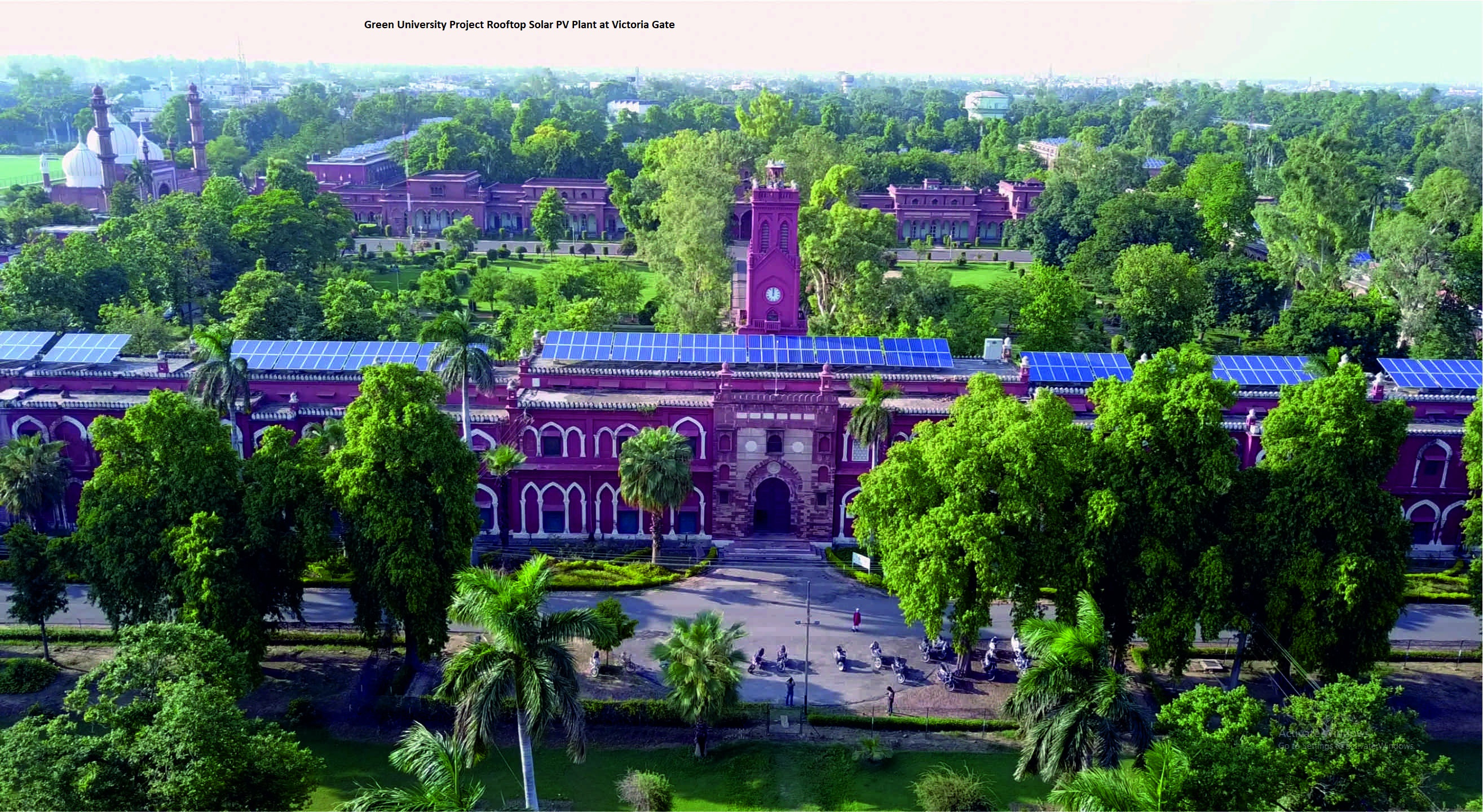
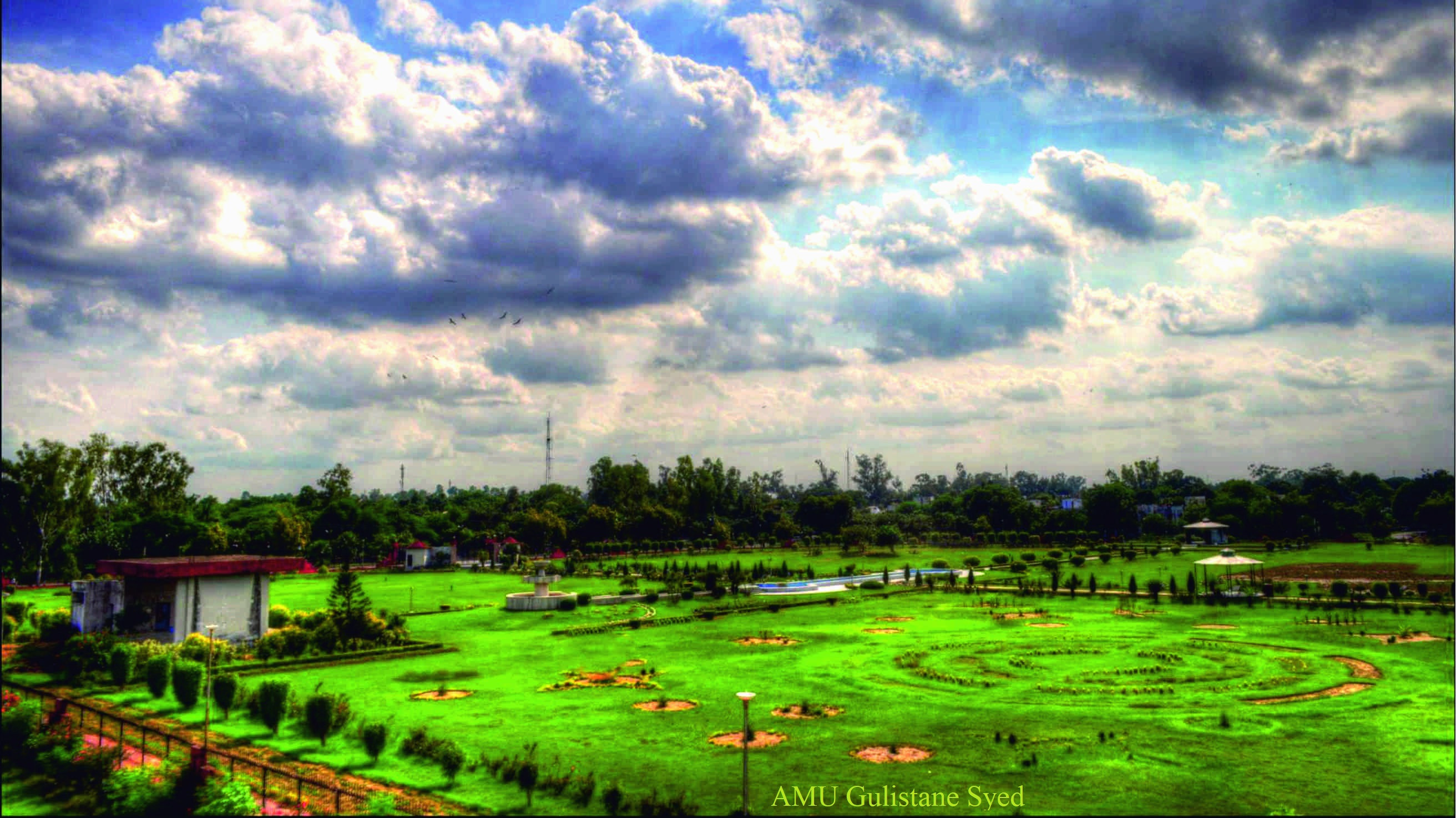
The campus is a small city in its own right. It holds the Maulana Azad Library, the university's central library and among the largest in the country, alongside teaching hospitals, sports grounds, and heritage buildings that date to the Sir Syed years. Its best-known landmark is the Victoria Gate, and the university's recent Green University project has brought rooftop solar to the campus, so the heritage core and a modern energy push now sit side by side.
Because AMU is fully residential, most of daily life happens inside the university rather than in the town around it, and the facilities are built for students who live on site rather than commute in.
Hostel
A defining feature of AMU, and the Facts page names it as such, is its residential character: students are attached to halls of residence rather than merely enrolled in a course. There are 19 halls of residence holding 80 hostels between them, separate for men and women, and a hall in the AMU sense, as the Guide to Admissions defines it, is a cluster of hostels administered by a Provost, with a reading room, a common room and indoor and outdoor games of its own. This hall system is a large part of what "Aligarh" means to people who studied there.
Allotment happens at admission rather than later: a student is normally allocated a hall at the time of admission and, once allotted a room, pays three months of dining hall charges on the spot. Two limits are printed plainly in the Guide and are worth reading before you count on a room. There is no guarantee of hostel accommodation, because the residential facility is limited and a room depends on seats being available; and students admitted to evening or part-time courses, to the Centre of Professional Courses or to distance and online education are not provided hostel accommodation at all unless stated otherwise. Anyone local, or anyone who does not want a room, is designated a non-resident student: non-resident men are allotted the Non-Resident Students Centre, while non-resident women are attached to one of the women's halls.
Faculty
AMU carries 1,686 teaching staff against 37,327 students on its rolls, supported by 5,610 non-teaching employees, according to the university's Facts page. Numbers of that size, spread across the 13 faculties, mean the teaching depth in any one discipline is a function of the department you join rather than the university average, so it is worth looking at a specific department's faculty list before you decide.
Notable Alumni
AMU's roll of former students reaches into the highest offices and the arts. Dr. Zakir Husain, the third President of India, and Mohammad Hamid Ansari, a two-term Vice-President, both studied at Aligarh, and the actor Naseeruddin Shah and the Urdu writer Ismat Chughtai came out of the same university, as the list of AMU alumni records. The spread, from constitutional office to Urdu literature to Hindi cinema, matches the breadth of what the place teaches.
News & Articles
AMU is currently headed by Prof. Naima Khatoon, the first woman to serve as its Vice-Chancellor, who was elected a Fellow of the Indian National Science Academy. Official notices, admission notifications and result announcements are posted through the university site and the Controller of Examinations portal rather than a single news feed, so those are the pages to watch during an admission cycle.
College Compare
Against the other central and general universities in the NIRF University list, AMU's position in the top ten puts it in the upper tier without reaching the very summit, and its law standing is stronger than its overall placing. What separates it from peers that admit almost entirely through CUET is its insistence on its own admission tests across engineering and most postgraduate study, which means preparing for AMU is a distinct exercise rather than a byproduct of a national exam. The trade-off is worth naming plainly: you get low fees, a residential campus and real breadth, against national rankings that are solid rather than headline-grabbing outside law. That is also the honest reading of the common AMU-versus-Delhi question a lot of applicants ask: the real choice is breadth, cost and hall life set against a metropolitan address and a higher overall placing.
Contact & Location
The university sits in the city of Aligarh in western Uttar Pradesh. Its Public Relations Officer handles general queries, and the official website carries the full directory of faculty, hall and office contacts.
| Contact | Detail |
|---|---|
| Address | Aligarh Muslim University, Aligarh, Uttar Pradesh 202002 |
| Phone (PRO) | +91-571-2700920 |
| amupro@amu.ac.in | |
| Website | amu.ac.in |
Verified
Approvals & Accreditation
Statutory approvals and accreditation grades from official bodies.
Aid
Scholarships
Decide
Compare with similar colleges
Voices
Student Reviews
Campus
Gallery
Questions
Frequently asked questions
References
Sources
- Official website – amu.ac.in
- Guide to Admissions 2026-27 – amucontrollerexams.com
- NIRF 2025 ranking – nirfindia.org
- list of AMU alumni – en.wikipedia.org
- Aerial view of the rooftop solar plant above the iconic Victoria Gate on the AMU campus – api.amu.ac.in
At a glance
Quick facts
- Established
- 1875
- NIRF 2025 (Architecture)
- Rank #26NIRF· 2025-08-14
- NAAC
- A+, CGPA 3.35
- Website
- amu.ac.in

Expertie Editorial Team
This page is researched and maintained by the Expertie editorial team, and checked against official sources.
Found something that looks wrong? Email us at editorial@expertie.com.
Last updated