
King George Medical University
King George's Medical University (KGMU) is a state government medical university in Lucknow, Uttar Pradesh, which settles the question applicants ask first: it is public, run by the state, and every MBBS and BDS seat is filled through NEET rather than any management or private route. It grew out of a 1905 medical college, took university status in 2002, and today teaches medicine, dentistry, nursing and allied health beside one of the oldest teaching hospitals in northern India. The seat counts, the government fee structure, the NEET counselling routes and KGMU's NIRF 2025 standing are all set out below.
Overview
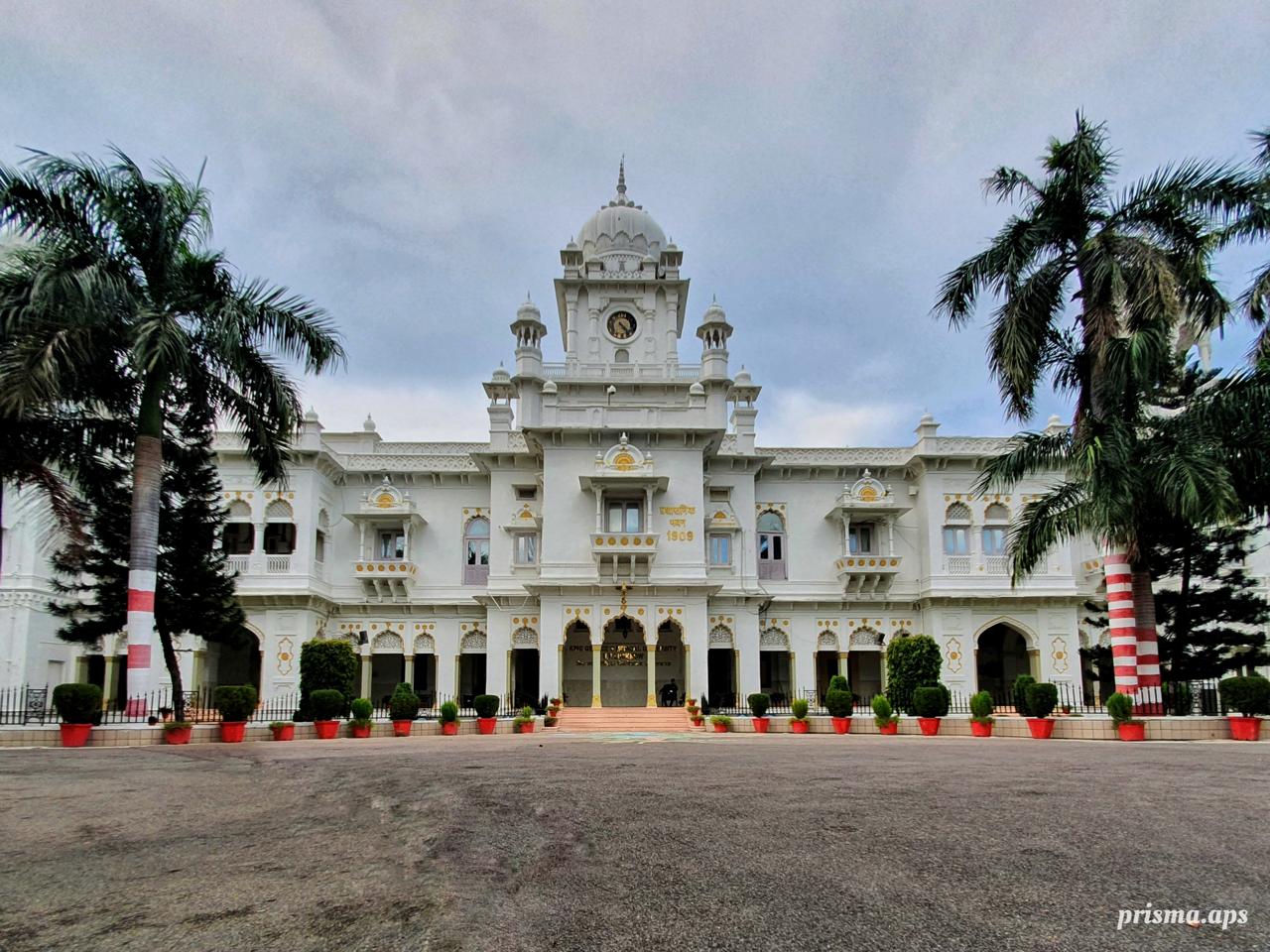
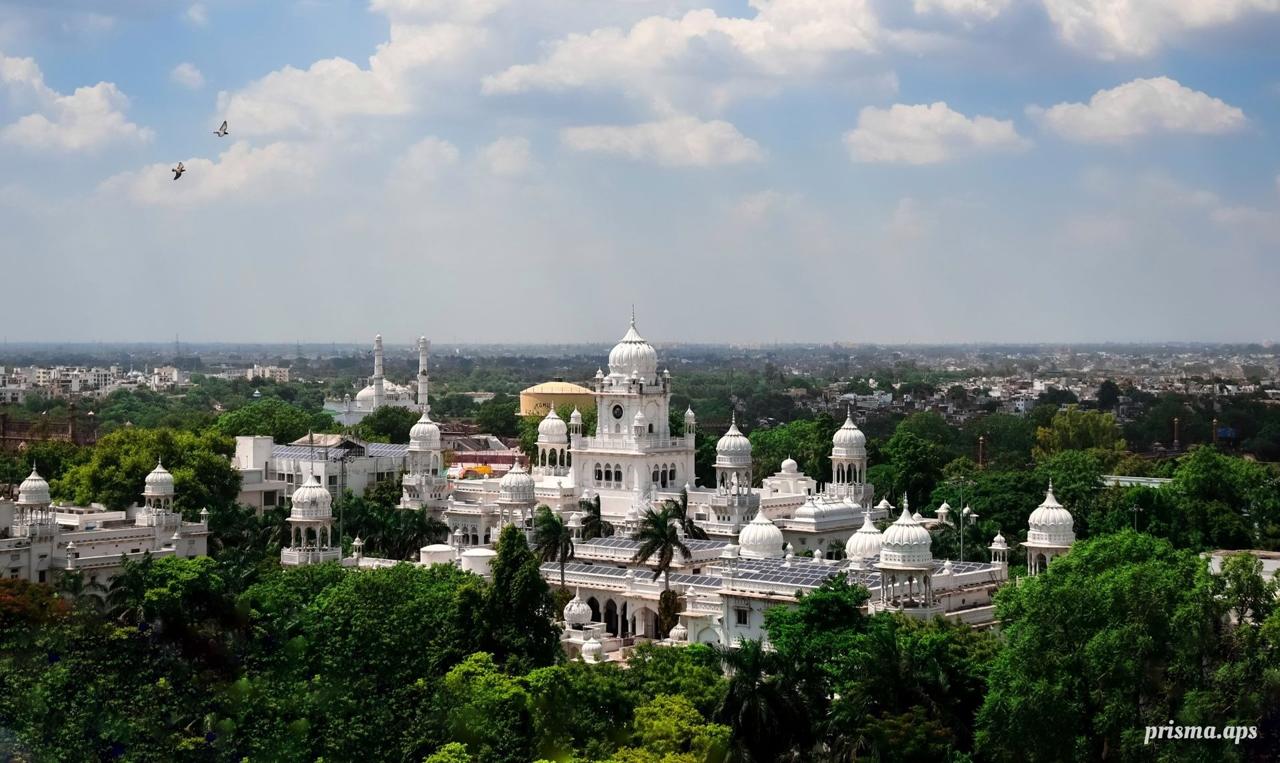
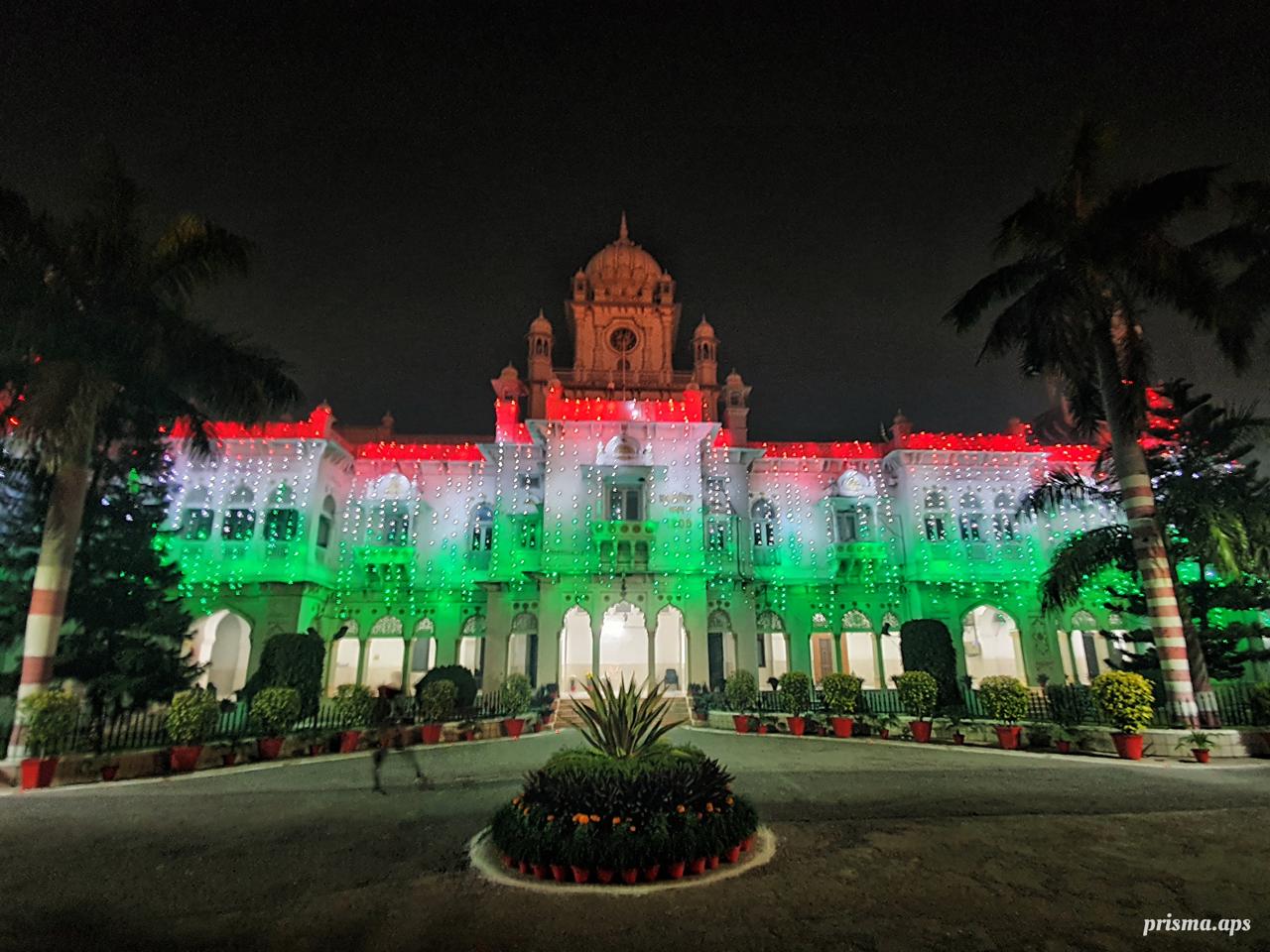
KGMU began as King George's Medical College in 1905 and opened its first teaching session in 1911; when the University of Lucknow was founded in 1921 the college became one of its constituent faculties, as its encyclopaedic record sets out. It was carved out as an independent university by an Act of the Uttar Pradesh legislature in 2002, first as Chhatrapati Shahuji Maharaj Medical University and then, from 2003, under its present name; the official university site records both the 1905 origin and the 2002 upgrade. The campus still centres on its early twentieth-century red-and-white buildings on Shah Mina Road in the Chowk quarter of old Lucknow.
Academically the university is organised into four faculties, listed on its site as Medical Sciences, Dental Sciences, Nursing, and Allied and Healthcare Sciences. It is a NAAC A++ accredited institution, and its teaching is inseparable from the Gandhi Memorial and Associated Hospitals it operates, where undergraduate and postgraduate students train on a very large in-patient and out-patient caseload. That combination, a government medical school attached to a high-volume tertiary hospital, is what defines the place for a student choosing it.
Courses & Fees
The undergraduate spine is the MBBS, a four-and-a-half-year degree followed by a compulsory rotating internship, and the BDS, a four-year dental degree; both admit only on NEET-UG. Above them sits a large postgraduate layer set out on the KGMU courses and admission page: MD and MS across 25 clinical and pre-clinical specialties, MDS across seven dental specialties, super-specialty DM and MCh programmes running nine specialties each, and a spread of BSc Nursing, a Master of Hospital Administration, an MPhil in Clinical Psychology and paramedical diplomas.
Because KGMU is a state institution, its academic fees are held at government levels rather than the sums charged by private or deemed medical universities. The annual tuition is the headline figure most families weigh:
| Programme | Category | Annual tuition |
|---|---|---|
| MBBS / BDS | General | Rs 18,000 |
| MBBS / BDS | SC / ST | Rs 9,000 |
| MD / MS / MDS / DM / MCh | General | Rs 24,000 |
On top of tuition, the same fee schedule adds small annual heads of about Rs 2,000 each for development and library, plus a one-time refundable caution deposit of Rs 10,000. Hostel charges, where a seat is taken, are billed separately. The exact composite payable at admission is the one published on the KGMU fee page each cycle, so treat the tuition above as the core figure rather than the total cheque.
Admissions
Entry to MBBS and BDS runs entirely on the National Eligibility cum Entrance Test (NEET-UG). Of the government seats, 15% are set aside for the All India Quota, counselled centrally by the Medical Counselling Committee at mcc.nic.in, and the remaining 85% form the Uttar Pradesh state quota counselled by the state Directorate General of Medical Education, a split the KGMU admission page sets out. A candidate registers for the relevant counselling, fills preferences, and is allotted a KGMU seat by rank, category and quota; there is no separate university entrance test and no management seat to buy.
Postgraduate entry follows the same two-channel design, with MD and MS seats ranked on NEET-PG scores and divided between the state and All India quotas. MDS admission runs on NEET-MDS, and the DM and MCh super-specialty seats are filled through the national super-specialty counselling. Eligibility for the clinical PG seats requires an MBBS with the twelve-month internship completed before the cut-off date.
Cutoff
KGMU's MBBS closing rank is set by NEET-UG demand, and because it is the senior government medical seat in Uttar Pradesh and a top-ten NIRF medical faculty, that rank runs well ahead of the state's newer colleges. Two separate sheets decide it: the Medical Counselling Committee publishes the All India Quota closing ranks after each round, and the state Directorate General of Medical Education publishes the 85% UP-quota ranks, which usually close at a looser rank than the All India Quota for the same category. The number worth planning against is the KGMU closing rank from the most recent round on those two portals, read for your own category and quota.
Placements
KGMU runs no placement cell, and for an MBBS that is the honest picture: the degree leads into the compulsory rotating internship inside the Gandhi Memorial and Associated Hospitals, and from there into a residency seat won through NEET-PG or into independent registered practice. The outcome the university actually controls is progression, its own wide bench of MD, MS, DM and MCh seats that a KGMU graduate can compete for, backed by the case volume of a state tertiary hospital during training. No official placement report with recruiter or package figures is published for KGMU, and none is shown here; for a government medical university that absence is the norm rather than a gap.
Seat Matrix
The sanctioned intake for the main programmes, as listed on the KGMU courses and admission page, is set out below. The undergraduate numbers are the ones most applicants track, and KGMU's MBBS intake is among the larger government allotments in the state.
| Programme | Sanctioned seats | Entrance |
|---|---|---|
| MBBS | 250 | NEET-UG |
| BDS | 70 | NEET-UG |
| MD / MS (25 specialties) | 338 | NEET-PG |
| Master of Hospital Administration | 60 | Institutional |
The DM and MCh super-specialty seats and the MDS dental seats are notified in smaller specialty-wise blocks, and the category break-up within each quota is published fresh in the counselling seat matrices every admission cycle by the MCC and the state authority.
Rankings
NIRF 2025 places KGMU 8th among India's medical institutions and 7th in dentistry, a top-ten position in both of the disciplines the university is built around. Its scoring leans on strong teaching resources and graduation outcomes, while research output and peer perception are the softer legs, a familiar profile for a state teaching university whose energy goes into a very heavy clinical load. Beyond its two subject fields, it also appears in the broader university and overall national lists and in NIRF's state public university ranking.
| NIRF 2025 category | Rank | Score |
|---|---|---|
| Medical | 8 | 68.77 |
| Dental | 7 | 68.89 |
| University | 50 | 53.13 |
| Overall | 83 | 50.94 |
Departments
The Faculty of Medical Sciences is the largest of the four faculties and the reason the postgraduate list runs so wide: its 25 MD and MS specialties span the pre-clinical departments such as anatomy, physiology and biochemistry, the para-clinical group including pathology, microbiology and pharmacology, and the full clinical range from general medicine and surgery to paediatrics, obstetrics and gynaecology, ophthalmology, orthopaedics and the super-specialties that host the DM and MCh seats. The Faculty of Dental Sciences carries the BDS and its seven MDS specialties, while the Faculty of Nursing and the Faculty of Allied and Healthcare Sciences run the nursing and paramedical programmes. The department directory and each unit's contact sit under the academics menu on the KGMU website.
Facilities & Infrastructure
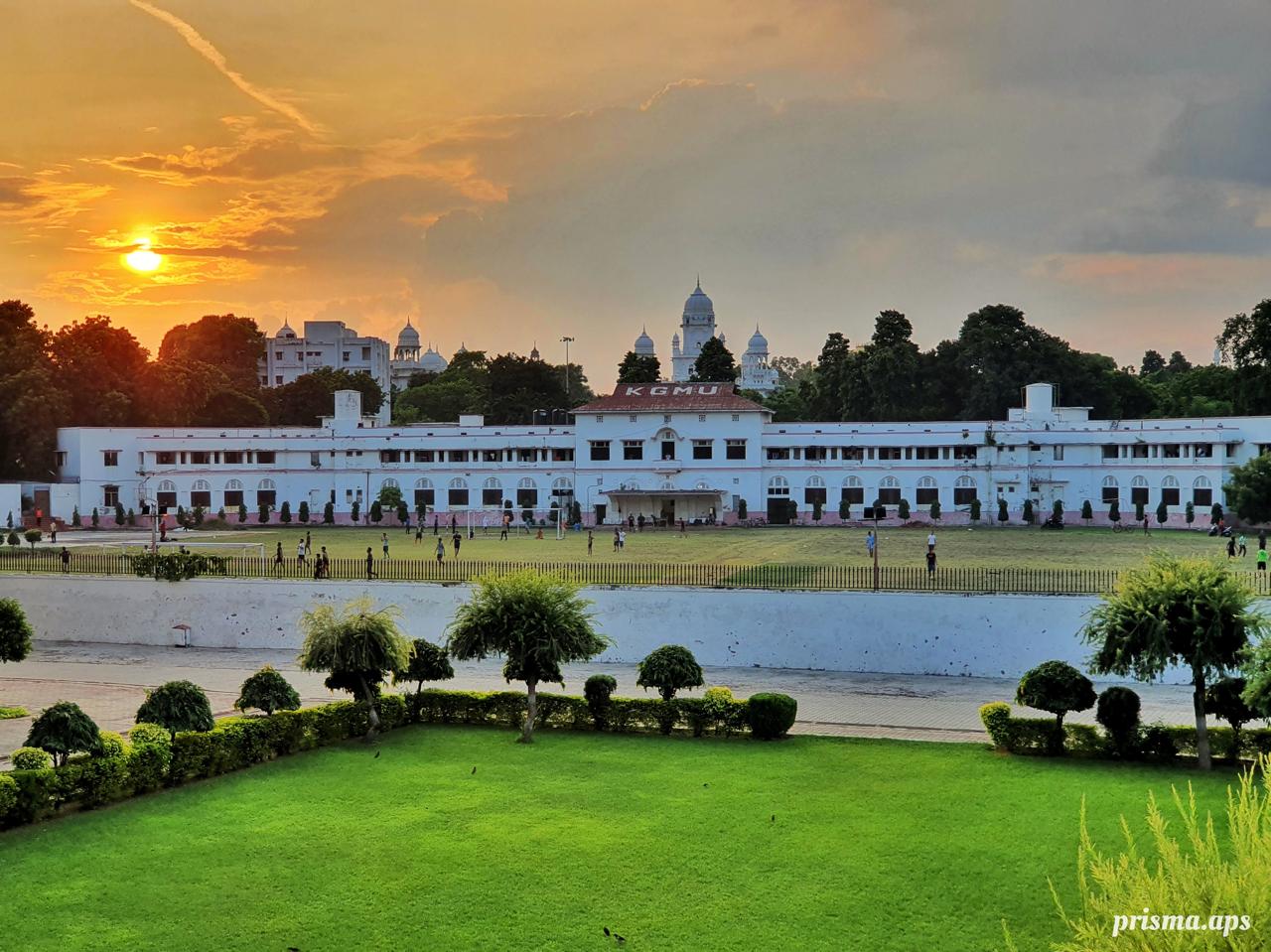
KGMU's estate is the historic campus in Chowk, where the heritage administrative and college blocks share the grounds with the clinical departments, lecture theatres, laboratories and the university library. The defining facility is the attached hospital system, the Gandhi Memorial and Associated Hospitals, a tertiary-care teaching hospital whose out-patient and in-patient departments, operation theatres, diagnostic labs and trauma services double as the training floor for students. The university has continued to add specialty and super-specialty blocks over the years, which is what sustains the DM and MCh teaching alongside the century-old heritage frontage.
Hostel
KGMU houses students on its Chowk campus, with separate hostels for men and women and distinct blocks for the undergraduate and postgraduate cohorts, and hostel and mess charges sit on top of the academic tuition in the fee table above. A resident MBBS or PG student is within walking distance of the wards they train on, which is part of why on-campus accommodation carries weight here; the current block allotment and mess rates are fixed in the KGMU hostel circular each session.
Faculty
Teaching at KGMU is delivered by the clinical, para-clinical and pre-clinical faculty attached to the 25 MD and MS specialties and the dental and nursing units, the same senior doctors who run the wards and clinics of the Gandhi Memorial and Associated Hospitals. That dual role, consultant and teacher, is the point of a hospital-based medical university, and it is why the department structure is a truer guide to KGMU's academic depth than any single staff count. KGMU does not publish one consolidated faculty headcount on its public pages, so the specialty-by-specialty faculty lists under the academics section are the reliable reference.
Notable Alumni
KGMU, under its earlier name King George's Medical College, has sent a long line of clinicians into Indian and international medicine. Naresh Trehan, the cardiovascular surgeon who founded the Medanta hospital network, trained here after joining the college in 1963, per his public profile. The Nepali ophthalmologist Sanduk Ruit, known for high-volume cataract surgery and the founder of the Tilganga Institute of Ophthalmology in Kathmandu, took his MBBS here and graduated in 1976, as his biography records. We name alumni only where the record is traceable, so this stays a short, checkable list rather than a long unverified one.
News & Articles
KGMU posts its admission notifications, examination schedules, result declarations and tender and recruitment notices through its official website and its dedicated examination portal at exam2025.kgmu.org. Anyone tracking a counselling date, an entrance result or a fee circular should watch those official channels, since the dates for the medical and dental cycles shift with the national NEET calendar.
College Compare
Against the national field, KGMU sits in a clear tier: a top-ten NIRF medical faculty that is a public university rather than an Institute of National Importance such as an AIIMS, and priced at state-government levels far below the private and deemed medical universities. Within Uttar Pradesh it is the senior government medical university, older and more highly ranked than the newer state colleges, which is why its NEET closing ranks are among the most competitive in the state. A student weighing KGMU against another government medical college is really comparing seat count, city, clinical exposure and closing rank, and KGMU's NIRF standing and hospital scale are its strongest cards.
Contact & Location
| Detail | Value |
|---|---|
| Address | Shah Mina Road, Chowk, Lucknow, Uttar Pradesh 226003 |
| info@kgmcindia.edu | |
| Website | kgmu.org |
| Type | State Public University |
The campus is in the Chowk area of central Lucknow, and the full department-wise phone directory and the admission and examination office contacts are listed on the official KGMU site.
Verified
Approvals & Accreditation
Statutory approvals and accreditation grades from official bodies.
Aid
Scholarships
Decide
Compare with similar colleges
Voices
Student Reviews
Campus
Gallery
Questions
Frequently asked questions
References
Sources
- encyclopaedic record – en.wikipedia.org
- Official website – kgmu.org
- mcc.nic.in – mcc.nic.in
- NIRF 2025 ranking – nirfindia.org
At a glance
Quick facts
- Established
- 1905
- NIRF 2025 (Dental)
- Rank #7NIRF· 2025-08-14
- NAAC
- A++, CGPA 3.67
- Website
- kgmu.org

Expertie Editorial Team
This page is researched and maintained by the Expertie editorial team, and checked against official sources.
Found something that looks wrong? Email us at editorial@expertie.com.
Last updated