

Indian Institute Of Technology, Roorkee
IIT Roorkee is the only IIT that NIRF 2025 places first in the country for architecture, and it is also the oldest engineering school in the group by more than a century. The institute began in 1847 as the College of Civil Engineering at Roorkee, a training ground built beside the Ganga Canal to staff the public works of northern India. This page sets out what a seat there costs, how the admission route works, where the institute stands in the official rankings, and what its own placement filing reports, using the fee circular and the NIRF data submission rather than second-hand figures.
Overview
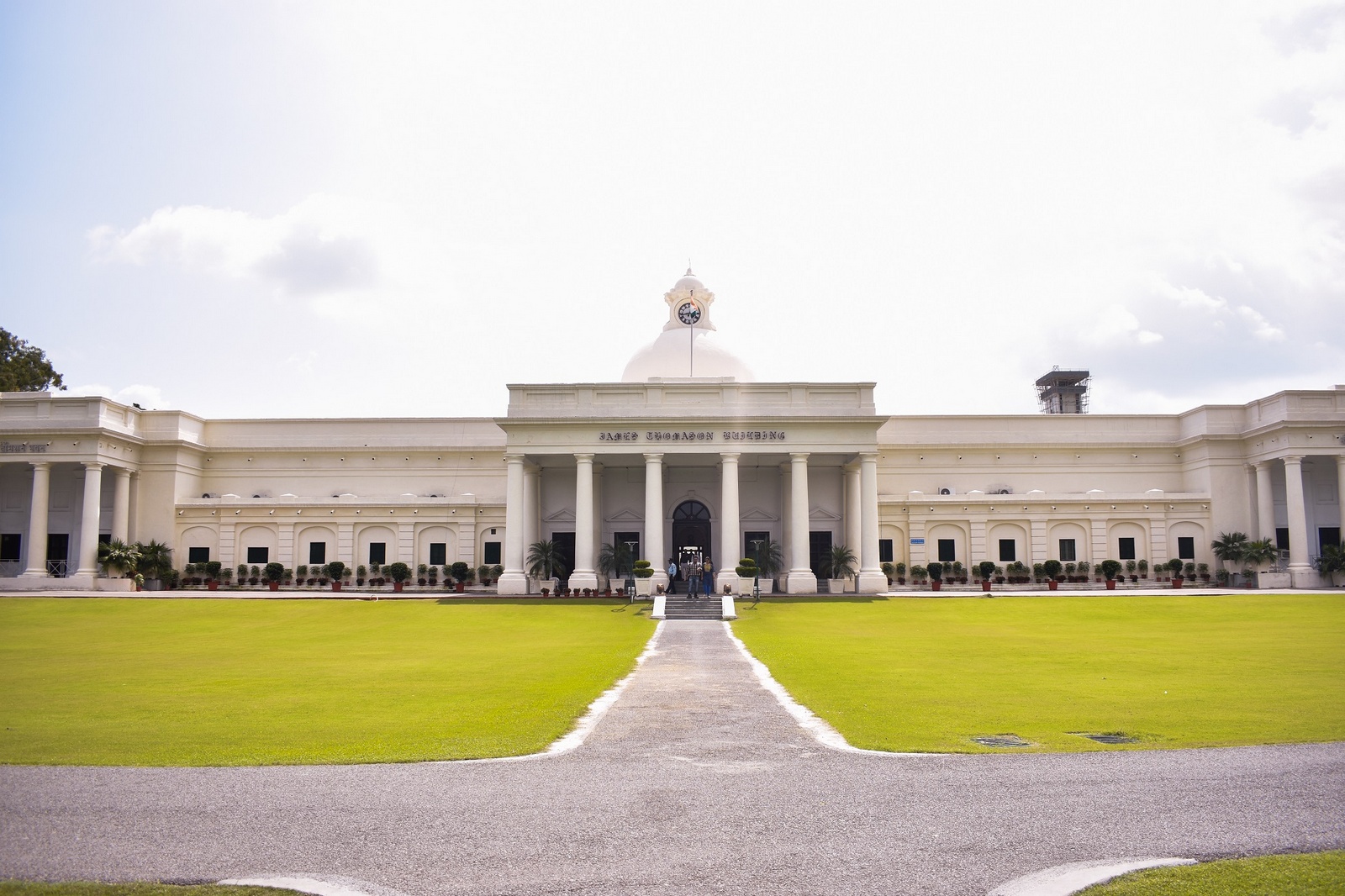
Roorkee's engineering pedigree predates the IIT system itself. The school was renamed Thomason College of Civil Engineering after Governor James Thomason, whose name still sits on the domed heritage building at the centre of campus, and in 1949 it became the University of Roorkee, India's first engineering university. It was converted into the seventh IIT in 2001, which is why alumni from different decades hold a Thomason College diploma, a University of Roorkee degree, or an IIT degree for what is essentially the same institution.
The institute sits in the town of Roorkee in the Haridwar district of Uttarakhand, with a second, smaller campus at Saharanpur. It is an Institute of National Importance funded by the central government, so it is neither private nor state-run. Its academic weight is spread across engineering, architecture and planning, sciences, humanities and management, and that breadth shows up in the rankings: a top-ten place overall alongside the number-one architecture standing described below.
Courses & Fees
Undergraduate teaching at Roorkee runs mostly on the four-year B.Tech, with a five-year B.Arch in the Department of Architecture and Planning and several five-year integrated master's streams. Postgraduate study covers the two-year M.Tech, M.Sc and MBA, along with doctoral research across every department.
| Programme | Level | Duration | Entrance route |
|---|---|---|---|
| B.Tech | Undergraduate | 4 years | JEE Advanced, then JoSAA |
| B.Arch | Undergraduate | 5 years | JEE Advanced plus the Architecture Aptitude Test |
| Integrated M.Tech / M.Sc | Undergraduate to PG | 5 years | JEE Advanced, then JoSAA |
| M.Tech / M.Sc | Postgraduate | 2 years | GATE, JAM and institute channels |
| MBA | Postgraduate | 2 years | CAT |
A general-category undergraduate pays Rs 1,00,000 in tuition per semester, and the 2025-26 fee schedule puts the full first-year charge, once hostel, mess and one-time items are added, at Rs 1,55,550 in the autumn term and Rs 1,39,050 in the spring. What most families actually pay depends on the income-linked waiver: students from SC, ST and PwD categories pay no tuition, families earning under Rs 1 lakh a year pay none either, and families in the Rs 1 lakh to Rs 5 lakh band get two-thirds of the tuition remitted.
| First-year charge (2025-26, B.Tech and other UG) | Autumn semester | Spring semester |
|---|---|---|
| General, OBC or EWS | Rs 1,55,550 | Rs 1,39,050 |
| SC, ST or PwD | Rs 55,550 | Rs 39,050 |
| Family income below Rs 1 lakh a year | Rs 55,550 | Rs 39,050 |
| Family income Rs 1 lakh to Rs 5 lakh (two-thirds waiver) | Rs 88,883 | Rs 72,383 |
Both figures are per semester, so a general-category student adds the two terms together to see the first year in full. Later years drop the one-time admission and deposit lines, so they run lighter than the opening year.
Admissions
For the B.Tech and the integrated streams, the route is fixed and national: qualify in JEE Main, clear the cut for JEE Advanced, sit that paper, then enter JoSAA counselling and receive a Roorkee seat only if your rank clears the branch you choose. There is no Roorkee-specific entrance test and no management quota; the shared JoSAA rank is the only lever into a seat.
The B.Arch has one extra step. Candidates still go through JEE Advanced, but they also have to clear the Architecture Aptitude Test, a drawing and design paper that decides eligibility for the architecture seat. Postgraduate admission works on separate national exams, GATE for the M.Tech, JAM for the M.Sc, and CAT for the MBA in the Department of Management Studies.
Cutoff
Roorkee does not set or publish its own cutoff. The closing rank for each branch is an output of JoSAA, and it moves every year and across every counselling round as candidates accept, swap and vacate seats, so a rank that closes a branch in an early round can shift by the final round.
Closing ranks also split by category and by the gender-neutral versus female-only seat pools, which means one branch carries several different closing ranks in the same year. The reliable place to read them is the official JoSAA opening and closing rank archive, which lists Roorkee round by round rather than as a single headline number. At Roorkee, Computer Science and the circuit branches close at the sharpest ranks, while the core engineering and the newer interdisciplinary branches close later in each round.
Placements
Roorkee reports its placement outcomes to NIRF programme by programme, and the numbers make the honest split between jobs and further study visible rather than blending them into one rate. In the 2023-24 cycle, 1,102 students finished the four-year B.Tech; 769 of them were placed and 333 went on to higher study, at a median salary of Rs 17,00,000. The placed count and the higher-study count together account for the whole graduating cohort, so the class did not disappear into an unexplained gap.
| Programme (2023-24) | Completed | Placed | Higher studies | Median salary |
|---|---|---|---|---|
| B.Tech (4-year) | 1,102 | 769 | 333 | Rs 17,00,000 |
| M.Tech and other 2-year PG | 755 | 337 | 417 | Rs 11,00,000 |
| Integrated 5-year PG | 128 | 68 | 60 | Rs 21,00,000 |
The pattern worth reading is the postgraduate one. The two-year master's cohorts send more people into further study than into placement, and the integrated five-year students post the highest median of the three, so the single "average package" that gets quoted for the institute hides three very different stories.
Seat Matrix
The sanctioned intake is the number of seats the institute is approved to fill. For 2023-24 Roorkee's filing lists 1,100 seats in the four-year UG programmes and 1,082 in the two-year PG programmes, alongside the smaller five-year streams.
| Programme group | Sanctioned intake (2023-24) |
|---|---|
| UG, 4-year (B.Tech) | 1,100 |
| UG, 5-year (B.Arch) | 30 |
| PG, 2-year (M.Tech, M.Sc, MBA) | 1,082 |
| PG, integrated 5-year | 223 |
That total is the pool JoSAA then divides by branch and by category. The branch-and-category breakdown, including the supernumerary female seats, is published fresh each admission cycle in the JoSAA seat matrix, so a student targeting a specific branch should read that year's matrix rather than assume last year's split.
Rankings
Architecture is where Roorkee stands alone. In NIRF 2025 the institute is ranked first in India for architecture with a score of 83.95, ahead of every other school in that list, which is a direct legacy of the civil-engineering and planning tradition it was built on. Its broader engineering and overall positions are strong rather than chart-topping.
| NIRF 2025 category | Rank | Score |
|---|---|---|
| Architecture | 1 | 83.95 |
| Engineering | 6 | 75.44 |
| Overall | 7 | 71.73 |
| Research | 8 | 67.27 |
| Management | 22 | 61.77 |
Read across the row, the institute is sixth in engineering at 75.44 and seventh overall at 71.73, with a research standing of eighth at 67.27. The Department of Management Studies pulls a separate management rank of 22 at 61.77, which is the standing of Roorkee's Department of Management Studies alone, not of the institute that tops the architecture table.
Departments
Roorkee teaches through 23 academic departments, and the mix is unusual because it carries subjects that most IITs never set up as full departments. It runs a dedicated Department of Earthquake Engineering, a Department of Hydrology, and a Department of Water Resources Development and Management, all of which grew out of the institute's long involvement with dams, canals and seismic safety in the Himalaya.
| Discipline area | Departments |
|---|---|
| Core engineering | Civil, Mechanical and Industrial, Electrical, Electronics and Communication, Chemical, Metallurgical and Materials |
| Computing and design | Computer Science and Engineering, Design |
| Earth, water and energy | Earthquake Engineering, Hydrology, Earth Sciences, Hydro and Renewable Energy, Water Resources Development and Management |
| Sciences | Physics, Chemistry, Mathematics, Biosciences and Bioengineering, Applied Mathematics and Scientific Computing |
| Materials and process | Paper and Packaging Technology, Polymer and Process Engineering |
| Built environment, humanities, management | Architecture and Planning, Humanities and Social Sciences, Management Studies |
The Department of Earthquake Engineering is the piece that gives the campus its identity in Indian engineering, since Roorkee ran the country's earliest formal work in the field and still houses instruments and test facilities built around it.
Facilities & Infrastructure
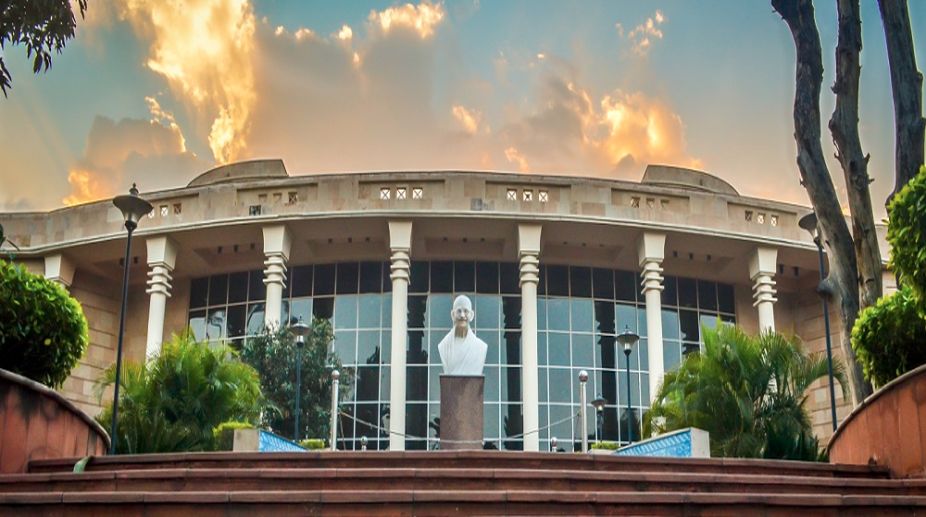
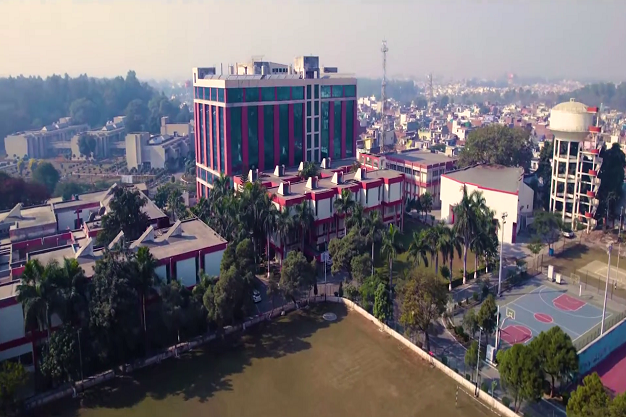
The campus is a working piece of nineteenth-century public-works history that still functions as a modern technical institute. The James Thomason Building, the white domed structure with a clock tower, anchors a green quadrangle, and the Mahatma Gandhi Central Library sits at the academic core of the main campus.
Beyond the Roorkee campus, the institute operates the Saharanpur campus for its paper technology, polymer and design work, so a Roorkee student's programme can be based at either site depending on the department. The institute's own filing describes standard research infrastructure across laboratories and workshops, though the sharpest campus detail for a prospective student is best confirmed on the institute's own pages rather than taken from summaries.
Hostel
Residence is built into the fee rather than charged as a large separate bill. The 2025-26 schedule sets hostel accommodation and electricity at Rs 7,500 per semester and a mess charge of Rs 27,750 in the autumn term, which covers a food advance that is later adjusted against actual consumption.
Because the accommodation line is quoted as the minimum charge for a bachelor hostel, married-student and other accommodation is billed differently, and the mess advance is trued up rather than fixed. The current hostel allotment and any revised charges are published on the institute's fee and hostel pages each session.
Faculty
Roorkee entered 641 faculty members in its NIRF 2025 filing, spread across the 23 departments from the large civil and mechanical groups down to the small specialist faculties in earthquake engineering and hydrology.
Underneath them sits a large research population: the same filing records 3,047 full-time PhD scholars. Most of that doctoral work is concentrated in the water, seismic and materials programmes the institute is known for, so a research degree here usually means joining an established lab rather than opening a new one.
Notable Alumni
Roorkee's alumni list runs from Victorian-era civil engineers to founders of technology companies, which fits an institution that has been training engineers since 1847. Sir Ganga Ram, a civil engineer of the 1873 batch remembered as the "Father of modern Lahore", is the clearest link back to the Thomason College era of canals and public buildings.
- Amit Singhal, the engineer who led Google Search as a senior vice president
- Rakesh Agrawal, a computer scientist known for foundational work in data mining
- Narendra Patni, founder of Patni Computer Systems
- Naveen Jain, founder of InfoSpace and Moon Express
- Jai Krishna, an earthquake-engineering scholar tied to the institute's seismic-research tradition
The through-line is that the same school produced both the irrigation engineers of colonial India and the search and data-science names of the internet era, which is a wider arc than most technical institutes can claim.
News & Articles
College Compare
Contact & Location
The main campus is in Roorkee, in the Haridwar district of Uttarakhand, with the second campus at Saharanpur in the same state. Roorkee sits on the Delhi-Haridwar corridor, which makes it reachable by road and rail from Delhi and Dehradun.
| Detail | Value |
|---|---|
| Main campus | Roorkee, Haridwar district, Uttarakhand |
| Second campus | Saharanpur, Uttarakhand |
| Type | Institute of National Importance, centrally funded |
| Official website | iitr.ac.in |
For department contacts, admission notices and the current fee schedule, the institute's own site is the authority, and the specific office pages change from cycle to cycle.
Verified
Approvals & Accreditation
Statutory approvals and accreditation grades from official bodies.
Aid
Scholarships
Decide
Compare with similar colleges
Voices
Student Reviews
Campus
Gallery
Questions
Frequently asked questions
References
Sources
- 1847 as the College of Civil Engineering at Roorkee – en.wikipedia.org
- Official website – iitr.ac.in
- JEE Advanced – jeeadv.ac.in
- JoSAA counselling – josaa.nic.in
- NIRF 2025 ranking – nirfindia.org
- IIT Roorkee logo – cmsredesign.channeli.in
At a glance
Quick facts
- Established
- 1847
- NIRF 2025 (Architecture)
- Rank #1NIRF· 2025-08-14
- Website
- iitr.ac.in

Expertie Editorial Team
This page is researched and maintained by the Expertie editorial team, and checked against official sources.
Found something that looks wrong? Email us at editorial@expertie.com.
Last updated