

Indian Institute Of Technology, Kharagpur
IIT Kharagpur is the institute the whole IIT system started with. It was built on the grounds of the Hijli Detention Camp, a jail where the British held Indian independence activists, and it opened in 1951 as the first of the IITs. That head start still shows in how wide the place is: a single campus that runs engineering, architecture, management, law and medical science and technology together, which no other IIT does at the same scale. This page pulls its fees, placement medians and rankings straight from IIT Kharagpur's own filings and the National Institutional Ranking Framework, so the numbers are the ones the institute itself reported.
Overview
IIT Kharagpur was founded in 1951 and is the oldest of the IITs, a fact the institute states in its own academic regulations. The campus sits in Kharagpur, in the Paschim Medinipur district of West Bengal, on rural land rather than in a metro, and it is classified as an Institute of National Importance. By the institute's own count it runs 20 academic departments, 22 centres and 11 schools of excellence, a spread that stretches from core engineering into law, management and medicine.
The physical scale matches the academic one. IIT Kharagpur occupies an 8.5 square kilometre, roughly 2,100 acre site, which makes it the largest of the IIT campuses, and the Hijli building where classes first ran is still on the grounds. Where a newer IIT is often a specialised engineering school, Kharagpur reads more like a full technical university, and that breadth is the single most useful thing to hold in mind when you compare its fees, seats and placement sheet against a younger IIT's.
Courses & Fees
IIT Kharagpur bills its fees per semester, and its tuition line is the same central figure the older IITs share. What is worth reading closely here is how the bill splits into a recurring semester charge, a one-time refundable deposit and a separate hall account. For a first-year general-category student in the top income slab, the institute's own admission manual lists these labelled totals.
| Fee block | Amount (Rs) |
|---|---|
| Tuition fee, per semester | 100000 |
| Total semester fee | 105750 |
| Total refundable deposit, one-time | 6000 |
| Total hall fees, mess advance included | 28855 |
The line that actually decides what a family pays is the income-linked tuition, which Kharagpur sets out as slabs rather than a single price.
| Category and annual family income | Tuition per semester (Rs) |
|---|---|
| UR, EWS or OBC-NCL, above Rs 5 lakh | 100000 |
| UR, EWS or OBC-NCL, Rs 1 lakh to Rs 5 lakh | 33335 |
| UR, EWS or OBC-NCL, below Rs 1 lakh | Nil |
| SC, ST or PwD | Nil |
| International, non-SAARC | 6.0 lakh per year |
| International, SAARC | 2.0 lakh per year |
Because the slab is applied only after income documents are verified, the headline Rs 100000 is the ceiling, not the amount every general-category family pays. Treat the current cycle's admission notification as the binding figure, since the institute revises these each year.
Admissions
Kharagpur admits into far more than one gate, which is the direct consequence of running so many kinds of programme. Its B.Tech, dual-degree and B.Arch seats are filled through JEE Advanced followed by the Joint Seat Allocation Authority counselling that all the IITs share, with architecture applicants also sitting the Architecture Aptitude Test. That single route, though, only opens the engineering and architecture side of the institute.
Each professional school admits on its own exam. The two-year MBA at the Vinod Gupta School of Management admits through CAT, the master's programmes in engineering run off GATE, the M.Sc. streams take students through the IIT Joint Admission Test for M.Sc., and the law school admits into its intellectual-property programmes on its own terms rather than through the counselling that decides a B.Tech seat. If you are aiming at Kharagpur specifically, the practical point is that the exam you need depends on the school you want, not on the IIT brand as a whole. The current eligibility and dates are the ones on the institute's own admission pages, so confirm there before you plan.
Cutoff
There is no single "IIT Kharagpur cutoff", and at this institute that is more than a technicality. Because Kharagpur offers three-, four- and five-year undergraduate bands across engineering, architecture and law, its closing ranks fan out across programmes that a one-line cutoff cannot capture. A four-year core-engineering seat and a five-year dual-degree seat in the same discipline close at different ranks in the same counselling round, and the architecture and law entries are decided by entirely separate mechanisms again.
The mechanism to watch is JoSAA's round-by-round closing ranks. Seats are allotted over several rounds, category by category and programme by programme, and the rank that mattered is the last rank admitted when a given seat filled, which only settles once the final round closes. Kharagpur, being one of the older and more sought-after IITs, tends to close its flagship branches at sharper ranks than the newer institutes, but the honest answer to "what rank do I need" is the closing rank for your exact branch, category and quota in the JoSAA data for your year, not a headline number.
Placements
Kharagpur's placement sheet only reads correctly cohort by cohort, because its single largest outflow is not a job at all: 308 of its two-year postgraduate graduates left for further study, the biggest higher-studies figure anywhere on the return and a research pipeline rather than a placement shortfall. The counts below are the ones the institute reported for the 2023-24 graduating cohorts across every programme length it runs.
| Programme | Graduated in minimum time | Placed | Median salary (Rs) | Went to higher studies |
|---|---|---|---|---|
| UG 4-year | 668 | 517 | 19,76,000 | 83 |
| UG 5-year | 669 | 467 | 20,00,000 | 99 |
| UG 3-year (LLB) | 34 | 30 | 15,00,000 | 3 |
| PG 2-year | 1219 | 679 | 14,00,000 | 308 |
| PG 3-year | 6 | 2 | 20,00,000 | 1 |
Two comparisons in that table are Kharagpur's own. The four-year undergraduate median of Rs 19,76,000 sits just below the five-year median of Rs 20,00,000, so the longer integrated degrees here are not the weaker outcome, and the three-year band with its Rs 15,00,000 median is the law programme rather than any engineering stream.
The institute's two professional schools report on their own, and both stand apart from the engineering sheet. The Vinod Gupta School of Management placed 124 of its 125 MBA graduates at a median of Rs 20,65,000 in 2023-24, effectively a full-placement year. The law school's two-year LLM cohort, a separate group from the three-year LLB in the table above, placed 22 of 34 graduates at a median of Rs 8,00,000, a lower band that reflects the legal market rather than the engineering one, and the sort of split you only see because Kharagpur runs both schools under one roof.
Seat Matrix
Kharagpur's sanctioned intake is best read as five programme bands rather than a single number, and the shape of those bands is itself distinctive. For the 2023-24 year the institute reported the approved intake below.
| Programme band | Sanctioned intake |
|---|---|
| UG 3-year | 60 |
| UG 4-year | 1260 |
| UG 5-year | 649 |
| PG 2-year | 2103 |
| PG 3-year | 26 |
The detail that no other IIT's seat matrix carries is the three-year undergraduate band: at Kharagpur those 60 seats are the LLB law programme, not any engineering stream. The engineering side alone is large, with 941 four-year, 609 five-year and 1471 two-year postgraduate seats on the engineering return, while the MBA adds 206 seats of its own. Because those bands mix engineering, architecture and law, only the JoSAA branch-and-category notification for your cycle shows the exact seat you can contest, so read it before you fill your preferences.
Rankings
IIT Kharagpur's 2025 NIRF results are unusual for how many different tables it appears near the top of, which is the ranking-sheet version of its academic breadth. It is one of a small handful of institutions ranked in engineering, architecture, management and law in the same year.
| NIRF 2025 category | Rank | Score |
|---|---|---|
| Overall | 6 | 73.99 |
| Engineering | 5 | 78.69 |
| Architecture | 3 | 77.38 |
| Research | 5 | 71.61 |
| Innovation | 4 | Not published |
| Law | 6 | 74.09 |
| Management | 12 | 66.97 |
The number worth dwelling on is the architecture rank of 3, which is higher than Kharagpur's own engineering rank of 5, and its law rank of 6 places it among the strongest law entries from any technical institute in the country. NIRF also placed it 5th for research and 4th on the innovation list. Read together, these say something a single overall rank of 6 hides: Kharagpur is not a one-discipline institute that happens to be old, it is a broad one that ranks well across fields most IITs do not teach at all.
Departments
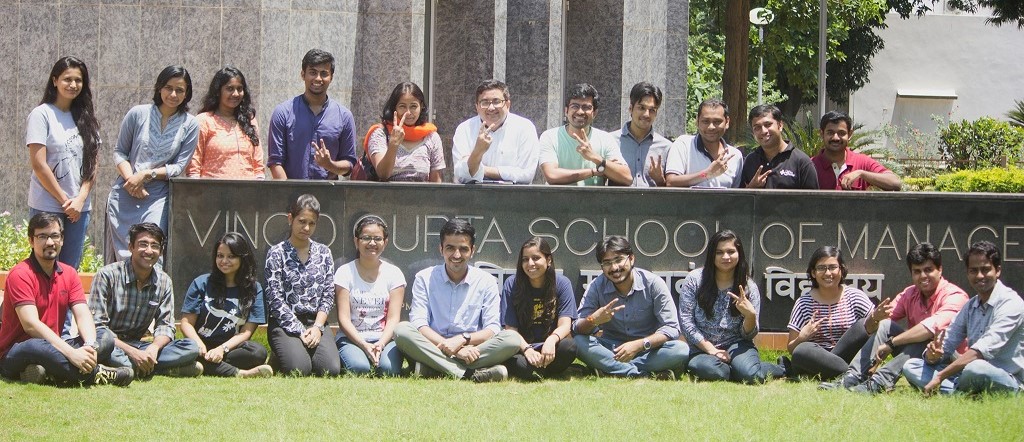
The academic structure follows the institute's own tally of 20 departments, 22 centres and 11 schools of excellence, and the schools are where Kharagpur's identity really sits. Alongside the familiar engineering departments it runs the Vinod Gupta School of Management, the Rajiv Gandhi School of Intellectual Property Law, and the School of Medical Science and Technology, three units that together let a single campus grant an engineering degree, an MBA, a law degree and a medical-technology qualification.
That range is not decorative. On the teaching side it produces the programme spread the institute lists in its regulations, 15 B.Tech (Hons.) programmes, 38 dual-degree programmes, 4 interdisciplinary dual-degree programmes, 6 B.S.-M.S. programmes and 5 two-year M.Sc. programmes, so a student can move between disciplines through dual degrees and minors in a way a narrower institute cannot offer. For an applicant, the useful question at Kharagpur is not only which branch but which school, because the school sets the exam, the fee scale and the placement market.
Facilities & Infrastructure
The 2,100 acre campus is effectively a self-contained town, which is a direct consequence of putting a national institute on rural land far from a city. Everything a residential student needs, from the halls of residence to the medical and sporting facilities, sits inside the campus rather than in a surrounding metro, and the original Hijli building has been kept and repurposed rather than demolished.
The campus also runs a large funded-research operation. In 2023-24 the institute reported 892 sponsored research projects running at once, the externally funded work that keeps laboratories busy across its two dozen departments. The takeaway for an applicant is that facilities here are spread over a very large footprint, so which department and hall you land in shapes daily life more than it would on a compact urban campus.
Hostel
IIT Kharagpur is a fully residential institute, and its halls of residence are part of the fee rather than an optional extra. The per-semester charges the admission manual lists for a resident student are modest against the tuition line: Rs 4000 for the hall, Rs 750 in seat rent and a Rs 730 overhead charge, with mess costs billed separately on top.
The halls also carry a good deal of the institute's history. Nehru Hall, to take one example, is where Sundar Pichai lived as an undergraduate, and hall identity runs through the inter-hall competitions that structure a lot of student life at Kharagpur. Because the campus is remote, the hall is where most of a fresher's social world actually forms, so it matters more here than at an IIT students can leave for a nearby city on a weekend.
Faculty
Kharagpur is as much a doctoral institution as an undergraduate one, and its staffing shows it. The institute reported 895 faculty members across its programmes, with 868 of them attached to the engineering disciplines that make up the bulk of the institute.
Sitting under that faculty is one of the larger research student bodies in the country. IIT Kharagpur reported 3,635 full-time PhD scholars on its rolls, and it conferred 519 doctorates in 2023-24. For an undergraduate that ratio has a concrete meaning: the labs you work in are staffed by research students, and the option of continuing into a research degree at the same institute is a well-worn path here rather than an exception, which is part of why so many of its own graduates show up in the higher-studies column.
Notable Alumni
Kharagpur's alumni list is the one most people already half-know, and two names anchor it. Sundar Pichai, the chief executive of Alphabet and Google, took his B.Tech in metallurgical engineering from IIT Kharagpur, graduating in 1993, and lived in Nehru Hall during his years on campus.
Arvind Kejriwal, later the chief minister of Delhi, is a mechanical engineering graduate of IIT Kharagpur. What is worth noting is how different their fields were, metallurgy and mechanical engineering, and how different their paths became, a technology chief executive and an elected politician, out of the same institute. That range fits the campus: because Kharagpur teaches across so many disciplines, its alumni do not cluster in a single industry the way a narrower school's tend to.
News & Articles
We do not maintain a live news feed for IIT Kharagpur, and the honest place to follow official announcements, admission notifications and placement updates is the institute's own website. Cutoff and placement figures in particular change every cycle, so the primary sources cited throughout this page are the ones to re-check when a new year's data is published.
College Compare
Placed against its peers, IIT Kharagpur's case is breadth rather than a single top rank. It sits at 5th in NIRF Engineering, behind the likes of IIT Madras and IIT Bombay, but it is one of the very few IITs to also rank in architecture, management and law in the same year, and it holds a higher position in architecture, at 3rd, than it does in engineering. The sharpest comparison to draw is not "which IIT ranks highest" but "which IIT lets you switch fields without switching institutes", and on that question Kharagpur's mix of engineering, a ranked management school and a ranked law school is close to unique. Use each institute's own NIRF standing and fee sheet, both cited on their pages, to make the trade-off for the specific programme you want.
Contact & Location
IIT Kharagpur is in Kharagpur, Paschim Medinipur district, West Bengal, at PIN 721302, and its official website is iitkgp.ac.in. The location is worth planning around, because this is not a metro campus. Kharagpur town lies well to the west of Kolkata and is best reached by rail, on the line out of Howrah, rather than by a nearby airport, and that rail-first access shapes how visiting families and new students actually arrive. The full campus address, department phone numbers and admission-office emails are on the institute's website, and the district and state are shown in the facts panel above.
Verified
Approvals & Accreditation
Statutory approvals and accreditation grades from official bodies.
Aid
Scholarships
Decide
Compare with similar colleges
Voices
Student Reviews
Campus
Gallery
Questions
Frequently asked questions
References
Sources
- Official website – iitkgp.ac.in
- 8.5 square kilometre, roughly 2,100 acre – en.wikipedia.org
- IIT Kharagpur Undergraduate Admission Manual – erp.iitkgp.ac.in
- NIRF 2025 ranking – nirfindia.org
- B.Tech in metallurgical engineering from IIT Kharagpur, graduating in 1993 – iitkgpalumnifoundation.in
At a glance
Quick facts
- Established
- 1951
- NIRF 2025 (Architecture)
- Rank #3NIRF· 2025-08-14
- Website
- iitkgp.ac.in

Expertie Editorial Team
This page is researched and maintained by the Expertie editorial team, and checked against official sources.
Found something that looks wrong? Email us at editorial@expertie.com.
Last updated