
Indian Institute Of Management, Mumbai
IIM Mumbai is the newest name on one of Mumbai's oldest technical-management campuses. For six decades the blocks beside Powai's Vihar Lake belonged to the National Institute of Industrial Engineering, better known as NITIE; a 2023 Act of Parliament converted that institute into a full Indian Institute of Management. A year into the change it placed sixth among Indian business schools in the NIRF 2025 management list, and the MBA it now grants still leans on the operations and supply-chain teaching NITIE was built around. One quirk worth knowing up front: the institute reports its placement salaries as top-tenth and top-half averages rather than a single batch-wide number, so even its headline figures reward a careful read.
Overview
The institute that admits students today was set up by the Government of India in 1963, with help from the United Nations Development Programme and the International Labour Organization, to train industrial engineers and works managers for a newly industrialising economy (IIM Mumbai institute note). That founding brief, engineering the productivity of factories and supply chains, is why its identity reads differently from the older IIMs at Ahmedabad or Bangalore, which began as general-management schools.
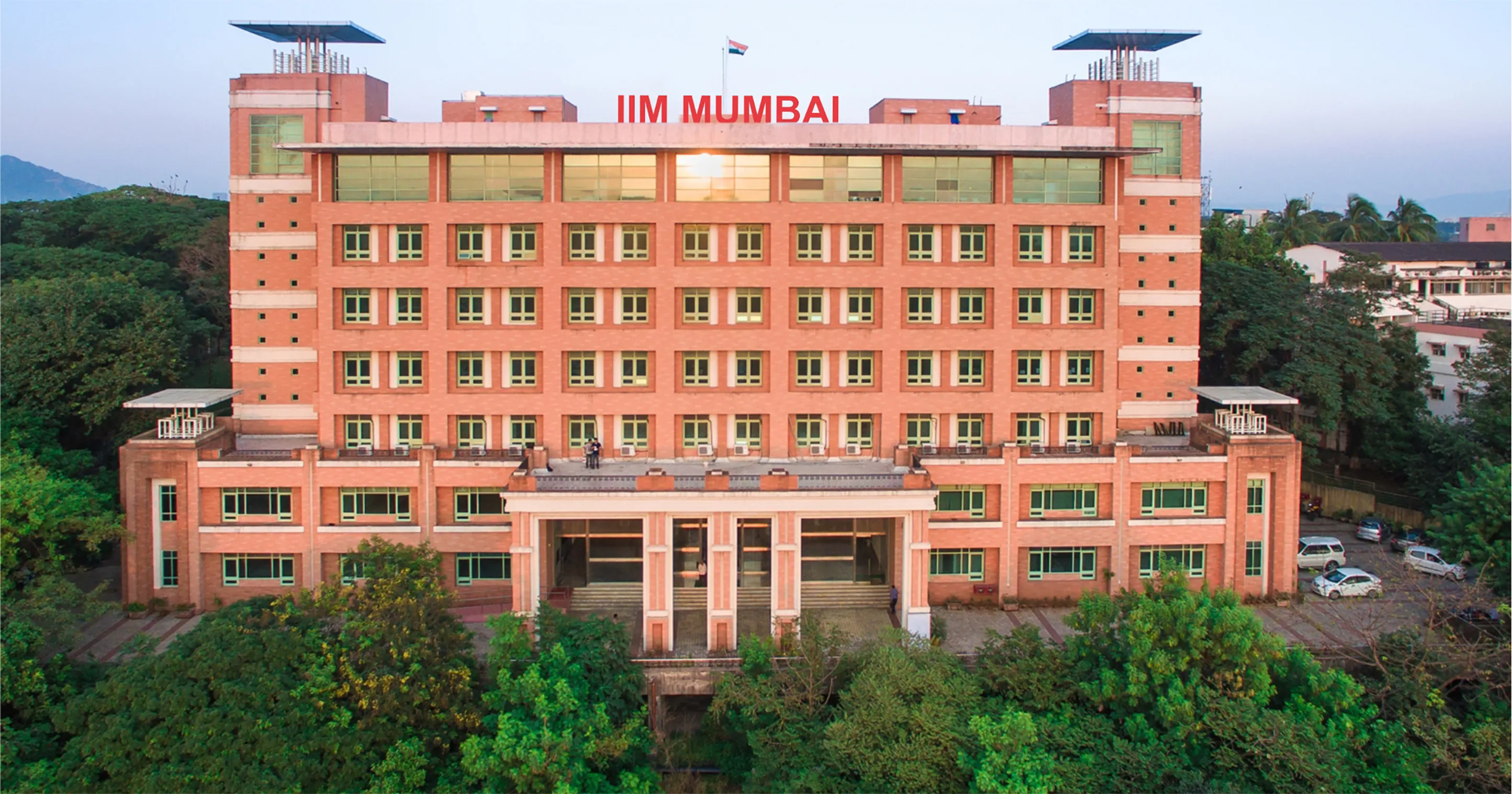
The rebranding is recent enough that students still meet both names. NITIE became IIM Mumbai in 2023, and much of the institute's own paperwork, alumni network and search footprint continues to say "NITIE" alongside the new title (official website). The campus itself did not move: it sits in Powai, in the north-eastern suburbs, on the wooded slope above Vihar Lake, sharing that neighbourhood with the city's other well-known technical institute. Prof. Manoj Kumar Tiwari heads the institute as Director (official website).
For an applicant, the practical takeaway is that IIM Mumbai now runs the standard IIM admission machinery, CAT plus interviews, over a curriculum still weighted toward operations, manufacturing and supply-chain work.
Courses & Fees
IIM Mumbai's degree portfolio is broader than a single MBA. The flagship is a two-year, full-time MBA taken through CAT, and it comes in three streams that share eligibility and fee but differ in electives: a general MBA, an MBA in Operations and Supply Chain Management that carries the old NITIE strength forward, and an MBA in Sustainability Management (IIM Mumbai admissions). Alongside these sit a two-year weekend MBA for working professionals (branded MBA-PGPM), one-year executive programmes, and doctoral study.
The fee below is the amount published for the 2026 to 2028 batch. The three CAT-route MBAs are priced together; the weekend MBA-PGPM is billed separately.
| Programme | Duration | Entrance | Programme fee |
|---|---|---|---|
| MBA (flagship) | 2 years | CAT | Rs 25 lakh |
| MBA (Operations & Supply Chain Management) | 2 years | CAT | Rs 25 lakh |
| MBA (Sustainability Management) | 2 years | CAT | Rs 25 lakh |
| MBA-PGPM (weekend, for working professionals) | 2 years | Own selection | Rs 18 lakh |
On top of the tuition figure, a full-time MBA admit pays a refundable caution deposit of Rs 50,000 at joining, and mess charges are settled separately from the programme fee (IIM Mumbai admissions). Hostel accommodation is provided on campus, which keeps living costs lower than an off-campus Mumbai rent would.
Admissions
Admission to the full-time MBA runs on CAT. The floor is a 50% bachelor's degree in any stream, 45% for SC, ST and PwD applicants, plus a valid score from that year's Common Admission Test, CAT-2025 for the batch entering next (IIM Mumbai admissions); final-year students may apply if they graduate before joining.
What sets IIM Mumbai apart from a CAT-only school is a parallel GMAT-and-international window: a share of seats is filled from that pool instead of the domestic CAT list, so the institute is reachable by candidates who never sat CAT at all. For everyone in the CAT pool the sequence is the usual one, a percentile earns the shortlist call and a written ability test plus interview settle the offer. Because the institute is only a couple of cycles into its IIM identity, though, those shortlisting bars are still moving, and last year's numbers are a weak guide to the notification that governs this year's intake.
Cutoff
There is no single "closing rank" at IIM Mumbai, and any page that prints one is guessing. CAT reports a percentile, not a rank, and the institute converts that percentile into a shortlist call, so what matters is clearing the sectional and overall percentile bars the admission notice sets, not landing above a fixed all-India position. IIMs of this tier typically shortlist general-category candidates from the high-ninety CAT percentiles, with concessions for reserved categories and for academic and gender diversity, but IIM Mumbai does not publish a locked cutoff figure ahead of the cycle. The honest answer for a candidate is to aim for the strongest CAT percentile they can and read the official criteria when they are released; the mechanism, not a memorised number, is what decides the call.
Placements
The most useful placement data for IIM Mumbai is its own final-placement report for the Batch of 2024, the cohort that entered under the NITIE name and graduated after the IIM conversion. That report records a highest salary of Rs 54.00 lakh, an average of Rs 47.29 lakh across the top 10% of the batch and Rs 33.84 lakh across the top 50%, with 180 companies taking part and 170 pre-placement offers made to a class of 446 students (IIM Mumbai final placement report, Batch of 2024).
| Metric (Batch of 2024) | Value |
|---|---|
| Highest salary | Rs 54.00 lakh |
| Average salary, top 10% of batch | Rs 47.29 lakh |
| Average salary, top 50% of batch | Rs 33.84 lakh |
| Companies participating | 180 |
| Pre-placement offers | 170 |
| First-time recruiters | 67 |
| Class size | 446 |
One thing to read carefully: the institute publishes top-decile and top-half averages rather than a single batch-wide average, so the Rs 47.29 lakh figure describes the strongest tenth of the class, not the median graduate. The pre-placement route was unusually strong that year, with 38.11% of the batch converting an internship into a full-time offer at a median of Rs 28.00 lakh and an average of Rs 29.44 lakh (IIM Mumbai final placement report, Batch of 2024). Recruiting was led by consulting, banking and financial services, technology and product roles, and manufacturing, the last of which reflects the operations reputation the institute carries from its NITIE years.
Seat Matrix
Seats at IIM Mumbai split across its three CAT-route MBA streams (general, operations and supply chain, and sustainability), with a small supernumerary add-on for international admits. Unlike the engineering institutes, whose JoSAA counselling fixes a category-wise seat matrix in public before admissions even open, IIM Mumbai settles its programme-wise intake inside each year's admission brochure, so the live number lives there and shifts cycle to cycle (IIM Mumbai admissions). What stays constant is the shape: a compact flagship cohort in the low hundreds rather than the thousands, which is part of why the CAT bar to enter sits as high as it does.
Rankings
IIM Mumbai's national standing rests on one ranking that clearly applies to it. In NIRF 2025 it was ranked sixth in the management category with an overall score of 77.58 (NIRF 2025 management ranking). Read against the framework's five parameters, its profile is lopsided in a telling way: graduation outcomes are its clear strength while research and professional practice is where it trails the schools above it.
| NIRF 2025 (management) | Score |
|---|---|
| Overall | 77.58 |
| Teaching, learning & resources | 85.20 |
| Research & professional practice | 60.18 |
| Graduation outcomes | 99.84 |
| Outreach & inclusivity | 78.00 |
| Perception | 62.03 |
The institute does not appear in the NIRF overall or engineering tables, so a claim that IIM Mumbai is a top-ten institute in any broader sense would be a stretch; its ranked standing is specifically as a management school.
Departments
IIM Mumbai organises its teaching around the areas its programmes advertise rather than around large disciplinary departments. The centre of gravity is operations and supply-chain management, the field NITIE was created to serve, extended now into analytics, manufacturing strategy and logistics. Around it sit the areas a general MBA needs: finance and economics, marketing, organisational behaviour and human resources, information technology and decision sciences, and a growing sustainability group that feeds the dedicated MBA in Sustainability Management (official website). The doctoral programme is run across these same areas, which is where much of the institute's research output originates.
Facilities & Infrastructure
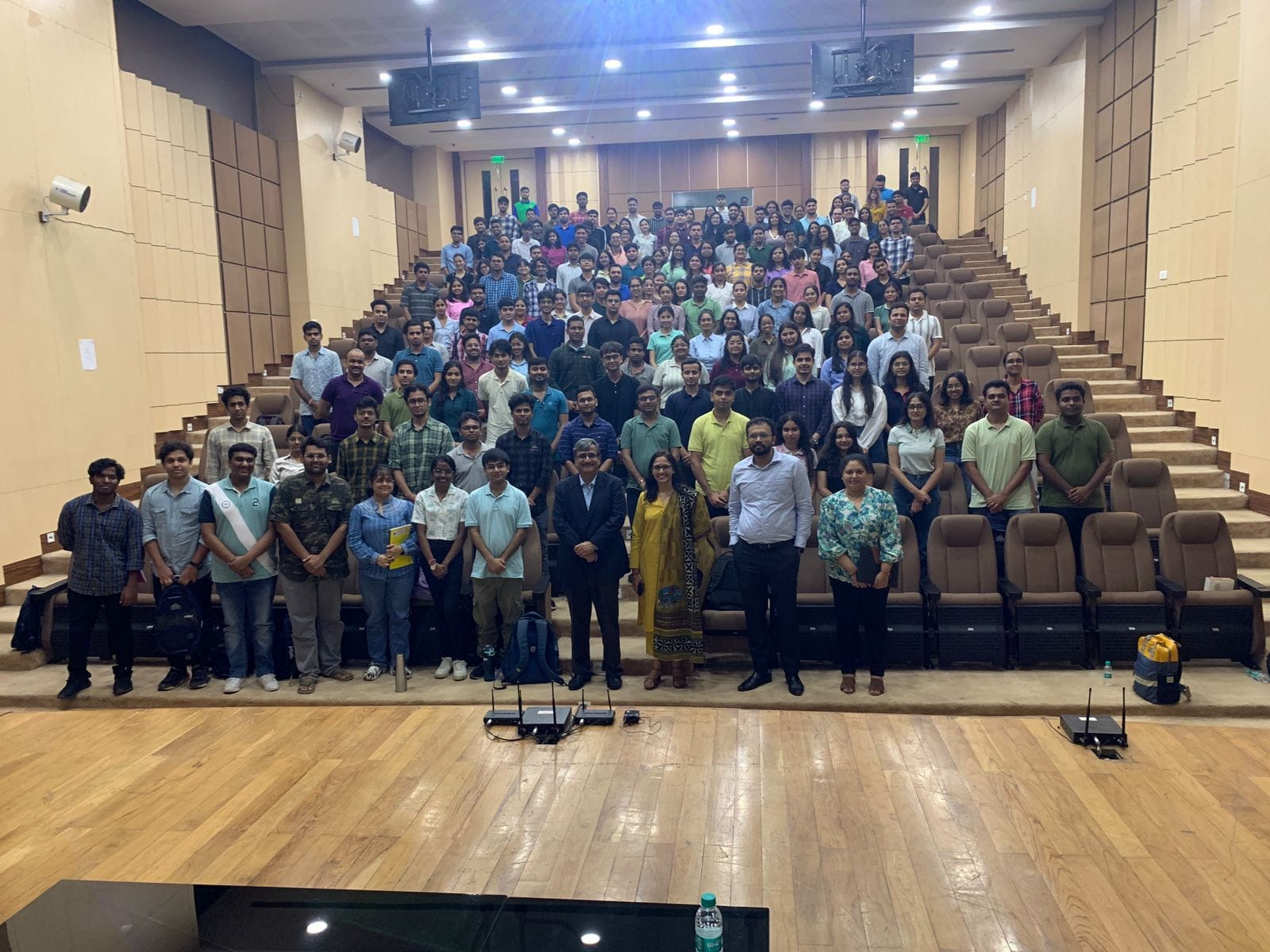
The academic core is a set of air-conditioned, projector-equipped classrooms built for case-method and participative teaching, and a fully air-conditioned, acoustically treated auditorium seating 200 for larger sessions and guest lectures (IIM Mumbai infrastructure). On the recreation side the institute lists courts and tables for badminton, table tennis, basketball, volleyball, cricket and carrom, so day-to-day campus life is not confined to the lecture blocks (IIM Mumbai infrastructure). Beyond what the institute details on its infrastructure page, a prospective student is best served by a campus visit, since IIM Mumbai's public facilities listing is lighter than the marketing pages of some peer schools.
Hostel
Residence is on campus. IIM Mumbai provides hostel accommodation to its full-time MBA, MBA-OSCM and MBA-SM students in well-furnished double-occupancy rooms, with a common room stocked with a music system, television and leisure reading for downtime (IIM Mumbai infrastructure). Because the flagship MBAs are residential, hostel charges and mess costs sit outside the tuition figure quoted earlier and are billed on their own.
Faculty
The institute is led by its Director, Prof. Manoj Kumar Tiwari, and its teaching sits in the operations, finance, marketing, information-technology, organisational-behaviour and sustainability areas its programmes draw on (official website). That faculty leans harder on operations, manufacturing and supply-chain research than a general-management IIM's would, a direct inheritance of the NITIE decades, and it is that concentration, more than any headline professor count, that shapes what the classroom actually teaches.
Notable Alumni
NITIE spent sixty years feeding industrial engineers, operations managers and works heads into Indian manufacturing and consulting, so the alumni network an IIM Mumbai student joins is older and more shop-floor than the finance-and-strategy circles of the classic IIMs. Naming individuals is where care is needed. The third-party lists that rank "famous NITIE alumni" routinely attach people who studied somewhere else entirely, so the only reliable check on whether a name really belongs to this institute is its own alumni association, and that, not an aggregator, is where a prospective student should confirm a claimed graduate.
News & Articles
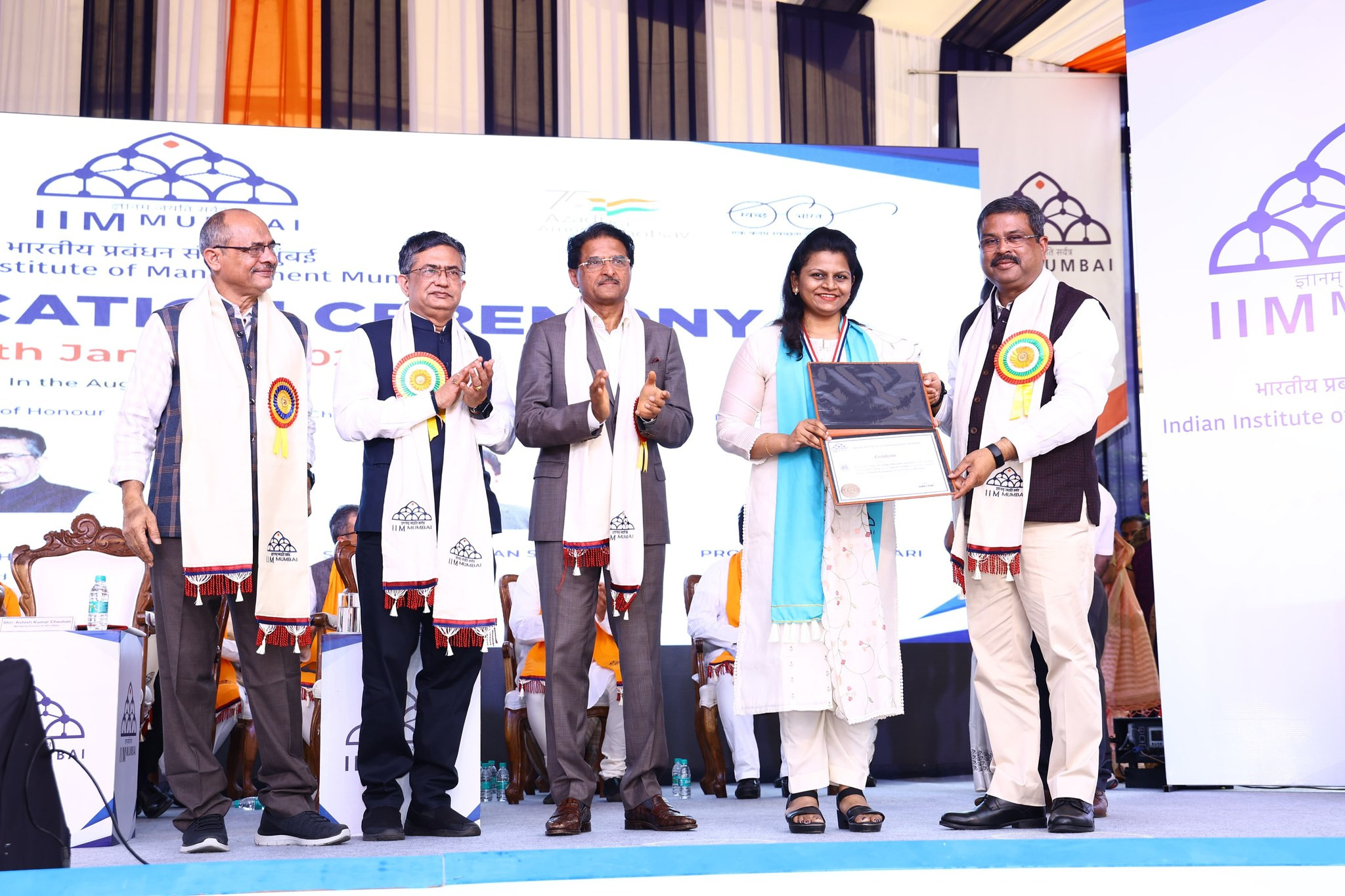
The institute's recent public milestones cluster around its new identity: the sixth-place management finish in NIRF 2025, the rollout of fresh IIM-branded degrees such as the Sustainability Management MBA and the weekend MBA-PGPM, and the 2026 convocation that sent out one of its first fully IIM-Mumbai-branded cohorts (official website).
College Compare
Within Mumbai, IIM Mumbai competes for the same CAT-strong applicants as the management school at IIT Bombay and the city's established private B-schools, and its NIRF 2025 management position sits ahead of both of those groups.
| Mumbai management school | NIRF 2025 management rank |
|---|---|
| IIM Mumbai | 6 |
| IIT Bombay (Shailesh J. Mehta School of Management) | 14 |
| S. P. Jain Institute of Management and Research | 20 |
| NMIMS | 24 |
The comparison a candidate really faces, though, is against the older IIMs. IIM Mumbai's pitch is its operations and supply-chain depth and a Mumbai location inside the country's financial and industrial hub; what it does not yet have is the multi-decade IIM brand and recruiter history that Ahmedabad, Bangalore or Kozhikode bring, which is worth weighing honestly against the newer institute's strengths.
Contact & Location
The campus and its admission office are reachable at the details below.
| Contact | Detail |
|---|---|
| Address | Vihar Lake Road, near Powai, Mumbai, Maharashtra 400087 |
| Board line | 022 2803 5200 |
| Admissions | 022 2803 6410 |
| Admissions email | admissions@iimmumbai.ac.in |
| Website | iimmumbai.ac.in |
Verified
Approvals & Accreditation
Statutory approvals and accreditation grades from official bodies.
Aid
Scholarships
Decide
Compare with similar colleges
Voices
Student Reviews
Campus
Gallery
Questions
Frequently asked questions
References
Sources
- Official website – iimmumbai.ac.in
- NIRF 2025 ranking – nirfindia.org
At a glance
Quick facts
- NIRF 2025 (Management)
- Rank #6NIRF· 2025-08-14
- Website
- iimmumbai.ac.in

Expertie Editorial Team
This page is researched and maintained by the Expertie editorial team, and checked against official sources.
Found something that looks wrong? Email us at editorial@expertie.com.
Last updated