

Symbiosis Institute Of Business Management, Pune
SIBM Pune is the oldest business school in the Symbiosis group and the one its own aspirants rank first, which is why a SNAP taker who clears the bar here rarely looks further down the Symbiosis list. Its two-year MBA runs entirely on the Lavale campus outside Pune, admits through the Symbiosis National Aptitude Test rather than CAT, and finished 11th on the Ministry of Education's NIRF 2025 management list, the highest position any Symbiosis institute holds there. The class that left in 2026 was placed at an average of 28.18 lakh. SNAP only gets a candidate through the door; the offer is settled face to face, in the group exercise, written test and interview that Symbiosis holds at the Pune campus.
Overview
SIBM Pune was founded in 1978 and is a constituent institute of Symbiosis International (Deemed University), the private deemed-to-be university that the University Grants Commission recognised under its 1956 Act. That status decides a lot for an applicant: SIBM is neither a government B-school like the IIMs nor a standalone private college, but a school inside a self-governing university that sets its own entrance test, its own fee and its own selection. The parent university carries a NAAC re-accreditation at the A++ grade, which is awarded to Symbiosis as a whole rather than to any single institute under it.
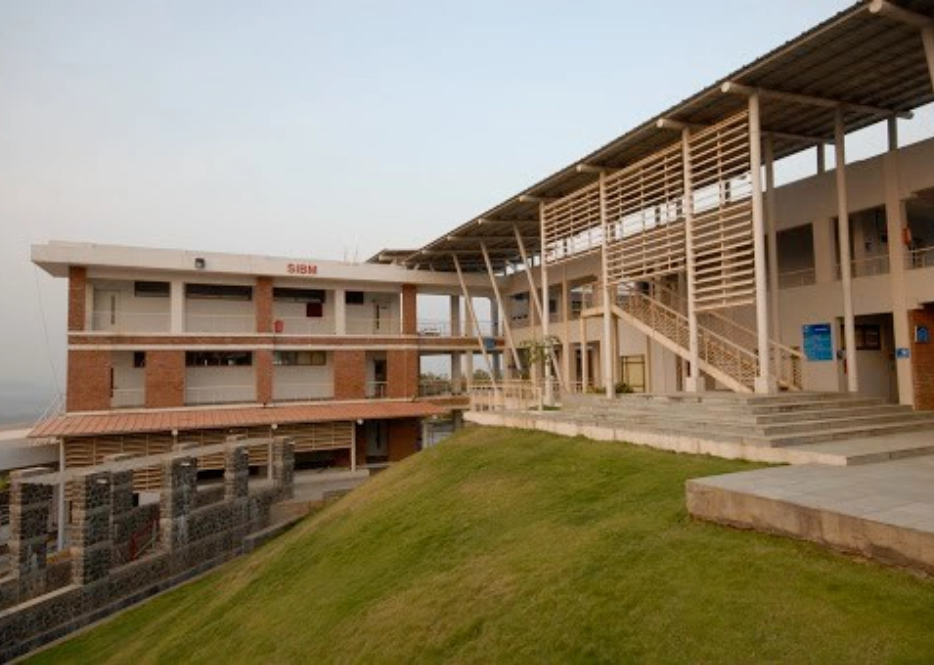
The campus is at Gram Lavale in Mulshi taluka, on the western edge of Pune, and because the MBA is fully residential it is where students live and study for the whole two years. SIBM Pune is also a member of the EFMD Global network, the European management-education body that a smaller set of Indian schools engage with. The honest summary for a candidate weighing it: a long-established, top-tier private management school with strong outcomes, reached through a test that only Symbiosis schools accept.
Courses & Fees
The core offering is a two-year, full-time, residential MBA run across four semesters, with a major the student chooses inside the programme. SIBM Pune's MBA page lists five specialisation tracks: Marketing, Finance, Human Resource Management, Operations and Supply Chain Management, and Data Analytics. Alongside it, the institute runs an MBA in Innovation and Entrepreneurship and an Executive MBA for working professionals, which are separate programmes with their own intake and calendar.
The number that binds most applicants is the two-year MBA fee. Its official fee structure for the 2026-2028 batch sets the academic fee at 6,55,000 per installment for Indian students, billed twice a year, and adds a mess charge of 59,800 in each installment, so those two heads recur every semester. The refundable deposits and the year's hostel fee sit on top and fall due only in the first year.
| Fee head (Batch 2026-2028, Indian students) | Amount |
|---|---|
| Academic fee | 6,55,000 per installment (two a year) |
| Mess charge | 59,800 per installment |
| Institute deposit (refundable, one-time) | 20,000 |
| Hostel deposit (refundable, one-time) | 20,000 |
| Hostel fee, three-sharing (first year only) | 1,57,300 |
| First-year installment 1, at admission | 9,12,100 |
| First-year installment 2 | 7,14,800 |
In the first year a family pays 9,12,100 at admission and 7,14,800 in the second installment, per the same schedule. The opening installment is the heavier of the two because it alone carries the refundable deposits and the full hostel fee for the year; only the academic and mess heads repeat in the second. Second-year hostel and mess figures are notified before that year begins and can rise by up to 15 percent, and government taxes apply where due.
Admissions
Admission to the SIBM Pune MBA is a two-step gate. First a candidate writes SNAP, the aptitude test Symbiosis conducts for all its postgraduate management institutes, and lists SIBM Pune as a preference. Eligibility is a bachelor's degree in any discipline from a recognised university or institution of national importance with at least 50 percent marks, relaxed to 45 percent for SC and ST applicants, as stated on the institute's MBA page.
Clearing the SNAP threshold only earns a call. The seat is decided by GE-PIWAT, the group exercise, personal interaction and written ability test that shortlisted candidates attend, and the institute holds this entire stage in Pune. Because a single SNAP score feeds every Symbiosis school, a candidate is effectively competing twice: once to score high enough for a SIBM Pune shortlist, and again to convert it in a room of people who cleared the same bar.
Cutoff
SIBM Pune releases a shortlist, not a percentile line, so the SNAP cut-offs floated on coaching sites are back-calculated from who received calls in earlier years and work only as a rough floor. The mechanism the institute follows is fixed even where the number is not: SNAP scores become percentiles, the top of that order is called for GE-PIWAT, and the seat is settled once the group exercise, written test and interview are scored alongside the SNAP result. Because SIBM Pune is the seat most SNAP takers want first, its converting percentile tends to sit above every other Symbiosis institute, though what that means in a given year turns on how strong the pool is and which category a candidate applies under. The only binding cut-off is the one the institute publishes with each year's shortlist, which is where a current figure should be read rather than inferred from an estimate.
Placements
SIBM Pune reports its outcomes through an annual Campus Recruitment Programme report. For the MBA batch of 2024-2026, the institute's CRP report 2025 records a highest package of 74.84 lakh, an average of 28.18 lakh and a median of 27.00 lakh. The average sitting only a little above the median is the useful signal here: the headline number reflects what a typical graduate was paid rather than a figure stretched by the handful of very large offers at the top.
| Metric (MBA batch 2024-2026) | Value |
|---|---|
| Highest CTC | 74.84 lakh |
| Average CTC | 28.18 lakh |
| Median CTC | 27.00 lakh |
The recruiter base is broad rather than concentrated. The same report records over 110 companies taking part across automotive, BFSI, consulting, FMCG, healthcare and pharmaceuticals, IT and manufacturing, split between 60 returning recruiters and 52 new ones. A large share of the class did not wait for the final process at all: 132 pre-placement offers were earned through summer internships and structured leadership programmes at firms such as Accenture, Airtel, Cipla, Godrej, ITC, Marico and Reliance. Pay also tracked the specialisation a student took, and the report breaks out an average for four of the tracks.
| Specialisation | Average CTC (batch 2024-2026) |
|---|---|
| Marketing | 29.48 lakh |
| Operations and Supply Chain | 27.41 lakh |
| Human Resources | 26.09 lakh |
| Finance | 25.73 lakh |
Seat Matrix
The MBA page fixes the two-year MBA intake at 180 students, the sanctioned figure for the full-time programme; the Innovation and Entrepreneurship and Executive tracks admit separately. Because SNAP is a private university's own test and Symbiosis handles allocation across its institutes internally, there is no state or national counselling round that would print a category-wise seat table for SIBM Pune. The category split that applies in a given cycle follows the reservation norms Symbiosis International sets as a deemed university, and it appears in that year's admission notification rather than in a standing public matrix.
Rankings
SIBM Pune's national standing rests on one table it appears in every year. On the NIRF 2025 management ranking it placed 11th with an overall score of 67.90, ahead of every other Symbiosis institute in the category. Behind that rank sits an unusually lopsided profile.
| NIRF 2025 parameter | SIBM Pune score |
|---|---|
| Overall | 67.90 |
| Teaching, Learning and Resources (TLR) | 78.53 |
| Research and Professional Practice (RPC) | 51.67 |
| Graduation Outcomes (GO) | 94.56 |
| Outreach and Inclusivity (OI) | 61.93 |
| Perception | 37.36 |
On graduation outcomes SIBM Pune scores 94.56 in the NIRF breakdown, close to what schools several places above it record, and its teaching-and-resources score of 78.53 is comparably strong. What holds the rank at 11 rather than higher is the 37.36 on perception, the survey-based measure where a private institute without a government or IIM lineage starts at a disadvantage, and a research score of 51.67 that trails the research-heavy universities on the list. For a candidate this reads as a school whose measured outcomes sit near the top, while its reputation score, not its results, is the ceiling on where it lands.
Departments
SIBM Pune is built around the MBA rather than a set of standalone departments, and its academic structure is the five specialisation areas the programme runs on: Marketing, Finance, Human Resource Management, Operations and Supply Chain Management, and Data Analytics, as set out on the MBA page. Each area owns the electives, live projects and recruiter engagement for its field, and a student commits to one after the shared first-year foundation. The separate Executive MBA and the Innovation and Entrepreneurship programme extend that base to working professionals and venture-minded applicants.
Facilities & Infrastructure
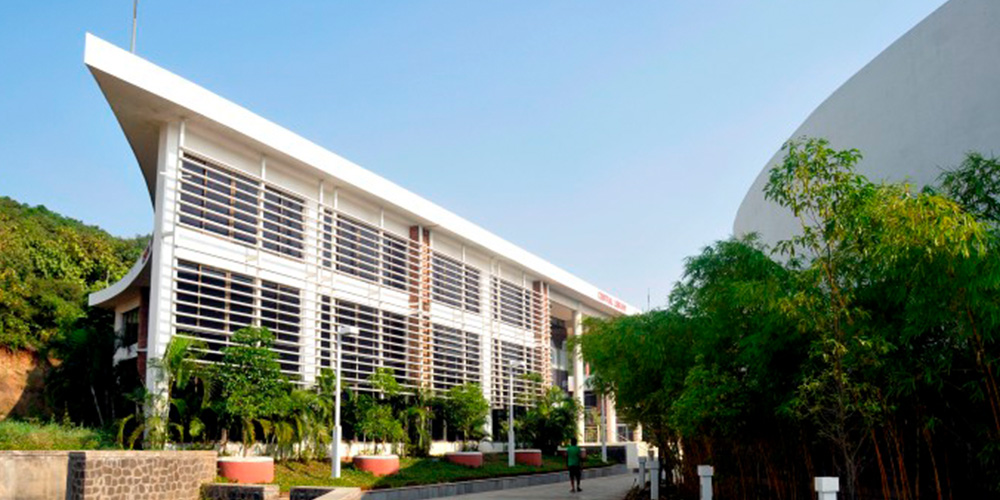
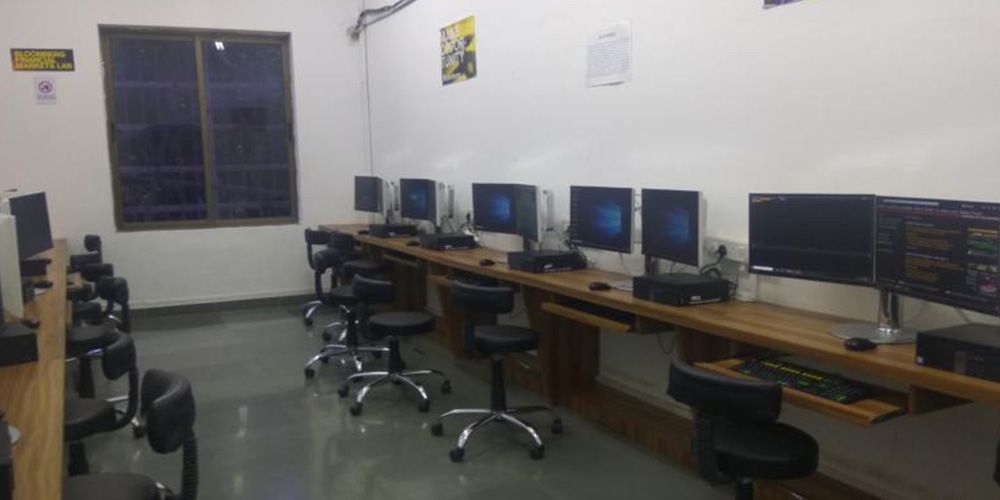
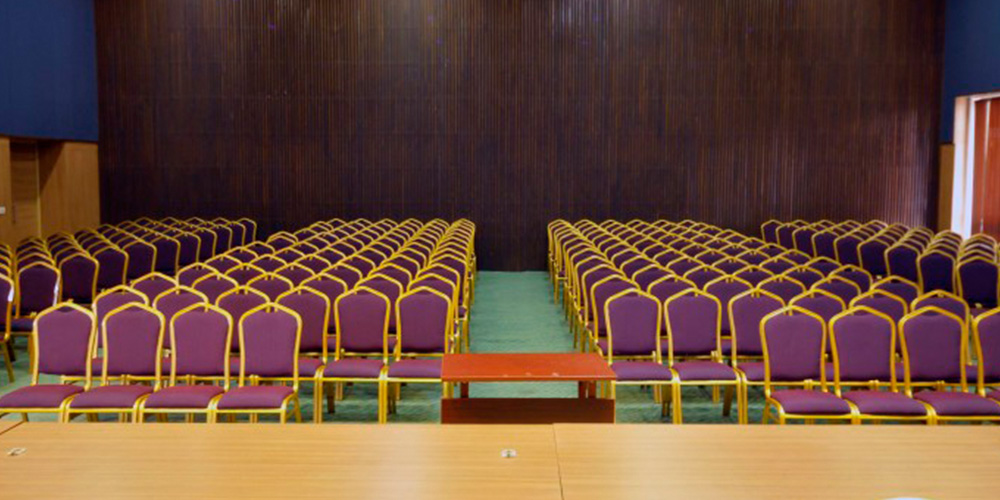
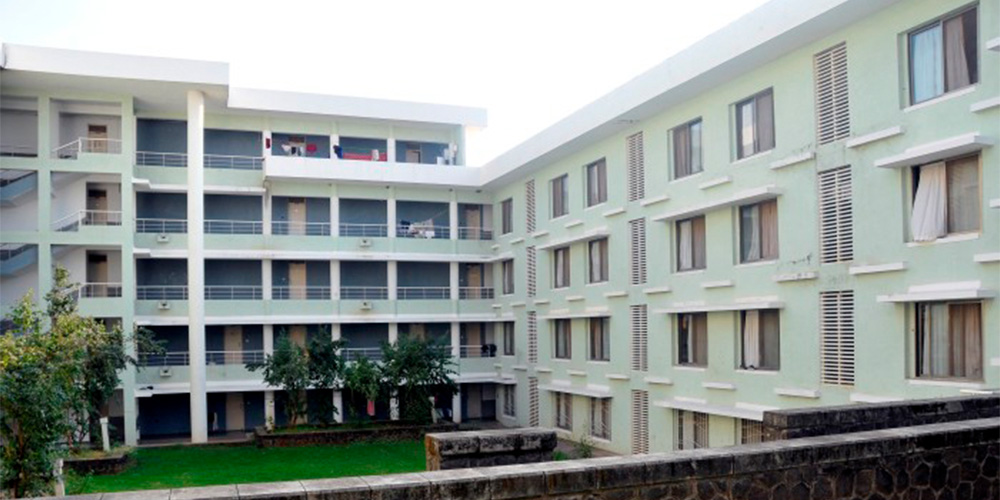
The Lavale campus is a self-contained residential site, with the academic block, library, hostels and mess set within walking distance of one another. Among the teaching facilities the institute points to is a Bloomberg Financial Markets Lab with live-terminal access, which the finance specialisation uses for markets and analytics work. The campus also runs a central library, tiered lecture classrooms and an auditorium that hosts the institute's conclaves and corporate events, alongside the sports and residential blocks a fully residential MBA depends on.
Hostel
On-campus accommodation is part of the programme rather than an option, since the MBA is residential. Per the 2026-2028 fee structure, a first-year student pays 1,57,300 for three-sharing hostel accommodation and 59,800 in mess charges, against a refundable hostel deposit of 20,000 taken at admission. Second-year residential charges are communicated before that year starts and can increase by up to 15 percent, so a student should plan for a modest rise rather than a flat repeat of the first-year figure.
Faculty
SIBM Pune's teaching faculty are organised under the five specialisation areas the MBA is built on rather than as standalone departments, and the director's note in the 2025 placement report is signed by the institute's director, Dr. Shrirang Altekar. The institute does not put a single faculty count on its public pages, so a candidate weighing academic depth is better served reading the area-wise faculty profiles on the official site, where each member's specialisation and background are set out.
Notable Alumni
We could not find a verified, independently traceable list of notable SIBM Pune alumni from an official or reliably documented source. Rather than repeat names that circulate on aggregator sites without a citation we can stand behind, this section stays empty until a primary source supports it. The institute's own alumni relations pages are where a specific name or batch can be confirmed.
News & Articles
The most recent institute-led activity on record is its 2025 to 2026 conclave calendar, which the CRP report documents as five industry events: Genesis, the product management conclave; Manthan, run as separate BFSI and consulting-and-strategy editions; a newly added HR conclave; and Senate, the institute's flagship management conclave. These sit alongside the annual placement season as the fixed points in the SIBM Pune year, and the official website is where each cycle's notices and the latest CRP report are posted.
College Compare
SIBM Pune is most usefully compared with the schools it sits near on the NIRF management table and with the private B-schools a SNAP taker also considers. Three levers actually separate them. The first is the entrance route, since SIBM accepts SNAP while most peers of its rank take CAT or XAT. The second is the fee, which as a private deemed-university programme is set by the institute rather than a state fee regulator. The third is the placement record, which the annual CRP report states in full. Set those three beside a rival's own published figures, and where SIBM Pune belongs on a personal shortlist becomes far clearer than any league table makes it.
Contact & Location
The campus and the placement office are the two contacts a prospective or recruiting visitor needs.
| Detail | Value |
|---|---|
| Campus | Gram Lavale, Tal Mulshi, Pune, Maharashtra 412115 |
| Placement office | placements@sibmpune.edu.in, 020-61936071/73 |
| Official website | sibm.edu |
Verified
Approvals & Accreditation
Statutory approvals and accreditation grades from official bodies.
Aid
Scholarships
Decide
Compare with similar colleges
Voices
Student Reviews
Campus
Gallery

Questions
Frequently asked questions
References
Sources
- Official website – sibm.edu
- NIRF 2025 ranking – nirfindia.org
At a glance
Quick facts
- Established
- 1978
- Affiliation
- Symbiosis International (Deemed University), Pune
- NIRF 2025 (Management)
- Rank #11NIRF· 2025-08-14
- Website
- sibm.edu

Expertie Editorial Team
This page is researched and maintained by the Expertie editorial team, and checked against official sources.
Found something that looks wrong? Email us at editorial@expertie.com.
Last updated