
Sri Venkateswara College is one of the few Delhi University colleges that owes its existence to a temple trust: the Tirumala Tirupati Devasthanams (TTD), which administers the Venkateswara temple at Tirupati, backed the college into being in 1961. Six decades on, "Venky" is a co-educational constituent college of the University of Delhi at Dhaula Kuan in south-west Delhi, and in 2025 it sits 11th on the NIRF College list with an overall score of 72.61. Its pull for applicants is a research-heavy science faculty and a genuinely multidisciplinary campus, set against a perception score that still lags its academic record.
Overview
Sri Venkateswara College opened in 1961 with 271 students and 13 teachers, first at Rouse Avenue near ITO before moving to its present 15-acre Dhaula Kuan campus in 1971. The foundation stone was laid the year it opened by Dr Sarvepalli Radhakrishnan, then vice-president of India. It began as a pass-course college teaching Telugu, Tamil, Hindi and Sanskrit, a nod to the south-Indian community the TTD set out to serve, and grew into a full science, commerce and arts college of roughly 4,500 students drawn from across the country.
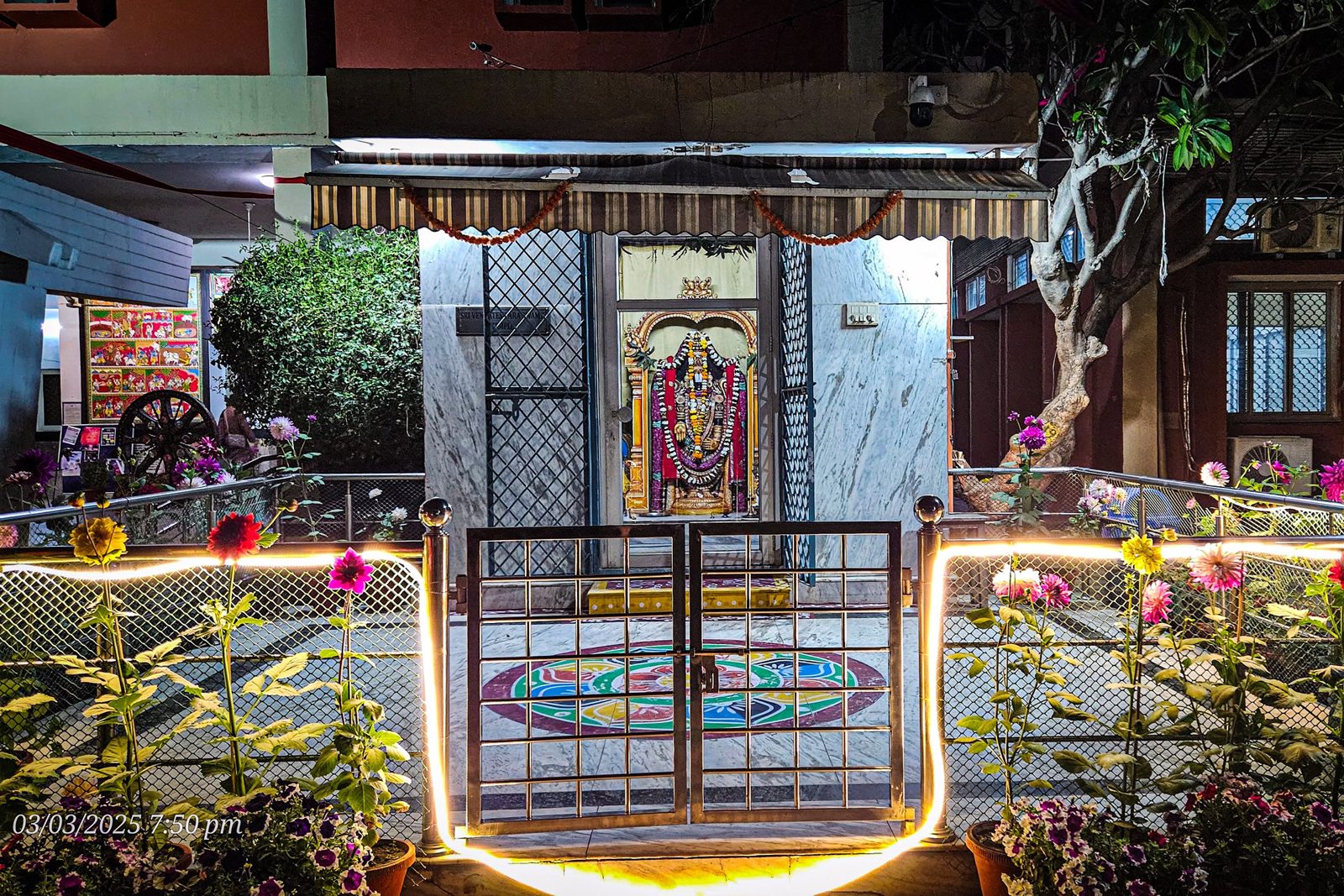
The college's character comes from two threads. One is that TTD lineage, still visible in the small Venkateswara Swamy shrine on campus and the temple observances that mark its calendar. The other is a research-forward science faculty, the reason research is its single strongest ranking parameter. Administratively it is a constituent college, fully maintained through the University of Delhi and the UGC.
Courses & Fees
The college teaches almost entirely at the undergraduate level under the four-year Undergraduate Curriculum Framework, with a smaller postgraduate wing. Honours degrees run across the sciences (Physics, Chemistry, Botany, Zoology, Bio-Chemistry, Biological Sciences, Electronics, Mathematics, Statistics), commerce (B.Com and B.Com Honours) and the arts (English, Hindi, Sanskrit, Economics, History, Political Science, Sociology). Alongside these sit two broad multidisciplinary degrees, B.A. Programme and B.Sc Life Sciences, plus add-on certificate courses in foreign languages, tourism, and bio-chemical technology.
Because the college is government-maintained rather than self-financed, a full degree here costs a small fraction of a comparable private-college programme, and the bill is weighted towards university and development heads rather than tuition. The college publishes its category-wise fee schedule, general and reserved, with the head-wise break-up, in the admission documents and prospectus it releases each session, and a ward of a college employee or a student under the Persons with Benchmark Disabilities category pays a reduced amount. The schedule is reset every year, so confirm the figure for your own programme on the current official fee sheet before you pay.
Admissions
There is no college-run test or interview at Sri Venkateswara College; every undergraduate seat is filled centrally by the University of Delhi through CUET-UG and its Common Seat Allocation System (CSAS). The college's part begins only after allotment, when it verifies a candidate's documents and collects the fee through its admission office.
Two SVC quirks catch applicants out. The Tamil and Telugu language combinations in the B.A. Programme are open only to students who actually studied that language in school, and each honours course is tied to specific CUET subject papers, so the domain subjects you sit in the exam decide which of the college's degrees you can even be considered for. Postgraduate admission runs on a parallel track through CUET-PG and the university's PG allocation. Admission questions go to the convener of the admission committee, currently Dr Shefali Shukla, at admission@svc.ac.in.
Cutoff
Sri Venkateswara College has no advance cutoff you can target. Under CSAS a programme's real cutoff is settled only once its seats fill in a given round, and it resets every year with how the CUET score distribution and applicant preferences land.
The one college-specific thing worth knowing is the shape of demand here. Economics, B.Com (Hons) and the sought-after science honours sit at the high-score end, while the Tamil and Telugu B.A. Programme combinations, a rarity on a Delhi campus, are the most reachable seats in the college for a candidate who studied those languages at school. Delhi University publishes the round-wise, category-wise closing scores on its CSAS dashboard through the cycle, and those are the figures to read against the exact programme you want.
Placements
Placement at a Delhi University college is run by a student-and-faculty cell rather than a corporate training-and-placement office, and the college reports its own figures for the 2025-2026 season. The headline numbers below come from the college placement cell.
| Placement metric (2025-2026) | Value |
|---|---|
| Highest package | Rs 15.98 LPA |
| Average package | Rs 7.19 LPA |
| Gross value of offers | Rs 9.13 crore |
| Internship offers | 245+ |
| Placement offers | 130+ |
| Recruiting organisations | 100+ |
The names that turn up are weighted to consulting, finance and analytics, with BCG, Bain & Company, Goldman Sachs, Deloitte, PwC, EY, KPMG, Accenture, ICICI Bank and Zomato among them. The commerce, economics and statistics students see the most direct hiring, while a large share of the science and arts cohort reads on for master's degrees, research or the competitive government exams. Treat the average package as one honest data point, not a figure promised to every seat.
Seat Matrix
Delhi University sets and publishes the sanctioned category-wise intake for each of the college's programmes before every cycle, in an official number-of-seats notice, adding supernumerary seats above that strength for sports, extra-curricular, armed-forces-ward, foreign-national, Kashmiri-migrant and Persons-with-Benchmark-Disabilities candidates. The current seat plan runs across the college's full set of honours, B.A. Programme and B.Sc courses; because the counts are re-fixed each year and filled round by round, they are read off that live notice rather than reproduced here.
Rankings
By the ranking that matters most to Indian applicants the college sits firmly in the national top tier of undergraduate colleges. In the 2025 National Institutional Ranking Framework it is 11th among all colleges in India, and its parameter break-up shows exactly where the strength lies.
| NIRF 2025, College category | Score |
|---|---|
| Overall | 72.61 |
| Teaching, Learning and Resources | 79.37 |
| Research and Professional Practice | 82.17 |
| Graduation Outcomes | 75.02 |
| Outreach and Inclusivity | 73.26 |
| Perception | 24.47 |
Read against those NIRF 2025 parameters, the research score of 82.17 is the college's best mark and unusually high for an undergraduate college, which fits its science-and-bioinformatics reputation. The drag on the overall figure is perception, at 24.47: recruiter-and-academic brand recall still trails the older marquee DU names even where the teaching and research scores are comparable.
Departments
Teaching is organised into roughly twenty departments across the three faculties. The sciences carry Physics, Chemistry, Botany, Zoology, Bio-Chemistry, Environmental Science, Electronics, Mathematics and Statistics; commerce is a single large department; and the arts side runs Economics, English, Hindi, Sanskrit, Tamil, Telugu, History, Political Science and Sociology, with Physical Education completing the set. The Tamil and Telugu departments are a genuine rarity in north-Indian higher education and a direct legacy of the college's south-Indian founding. Several departments run their own subject societies and annual academic events.
Facilities & Infrastructure
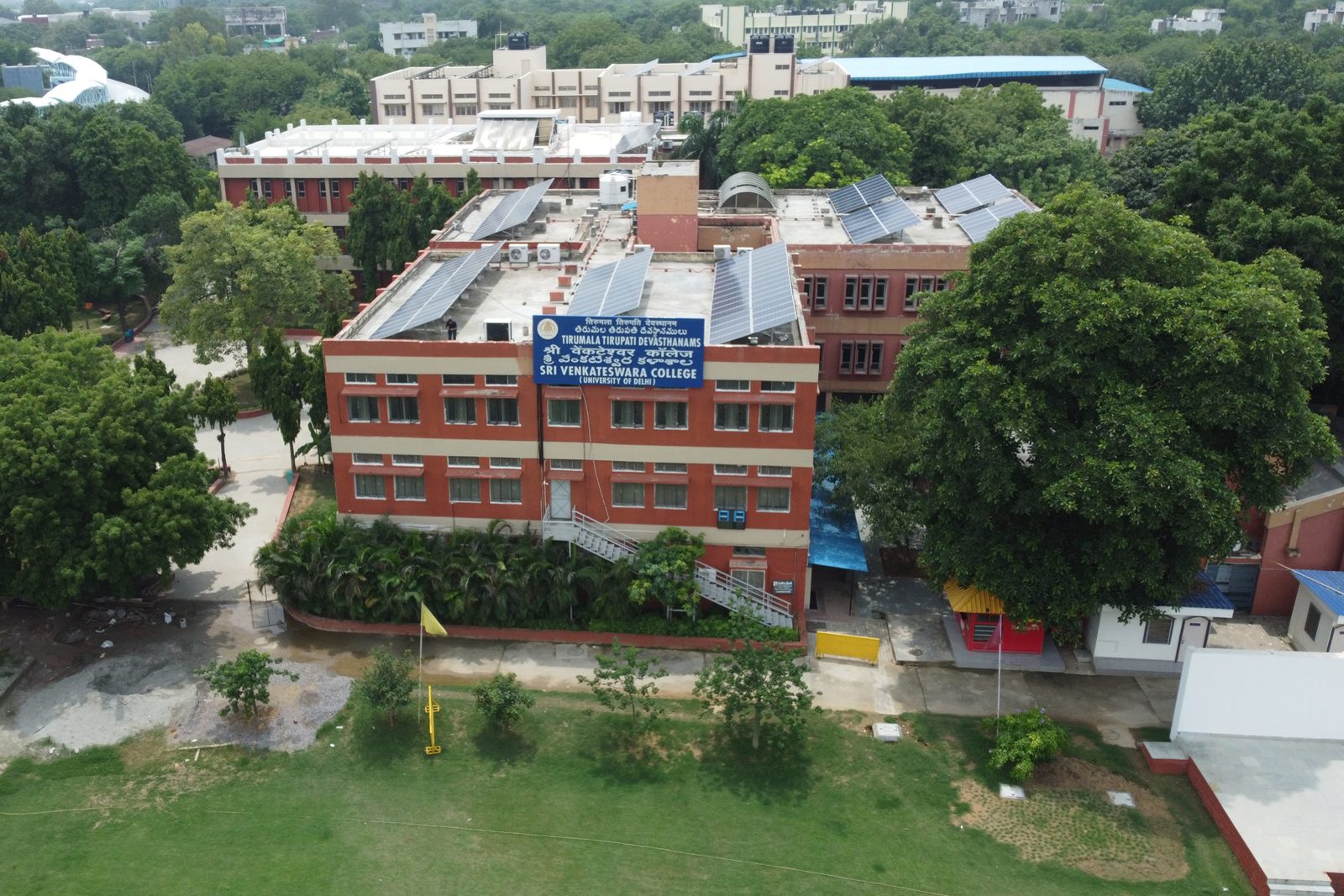
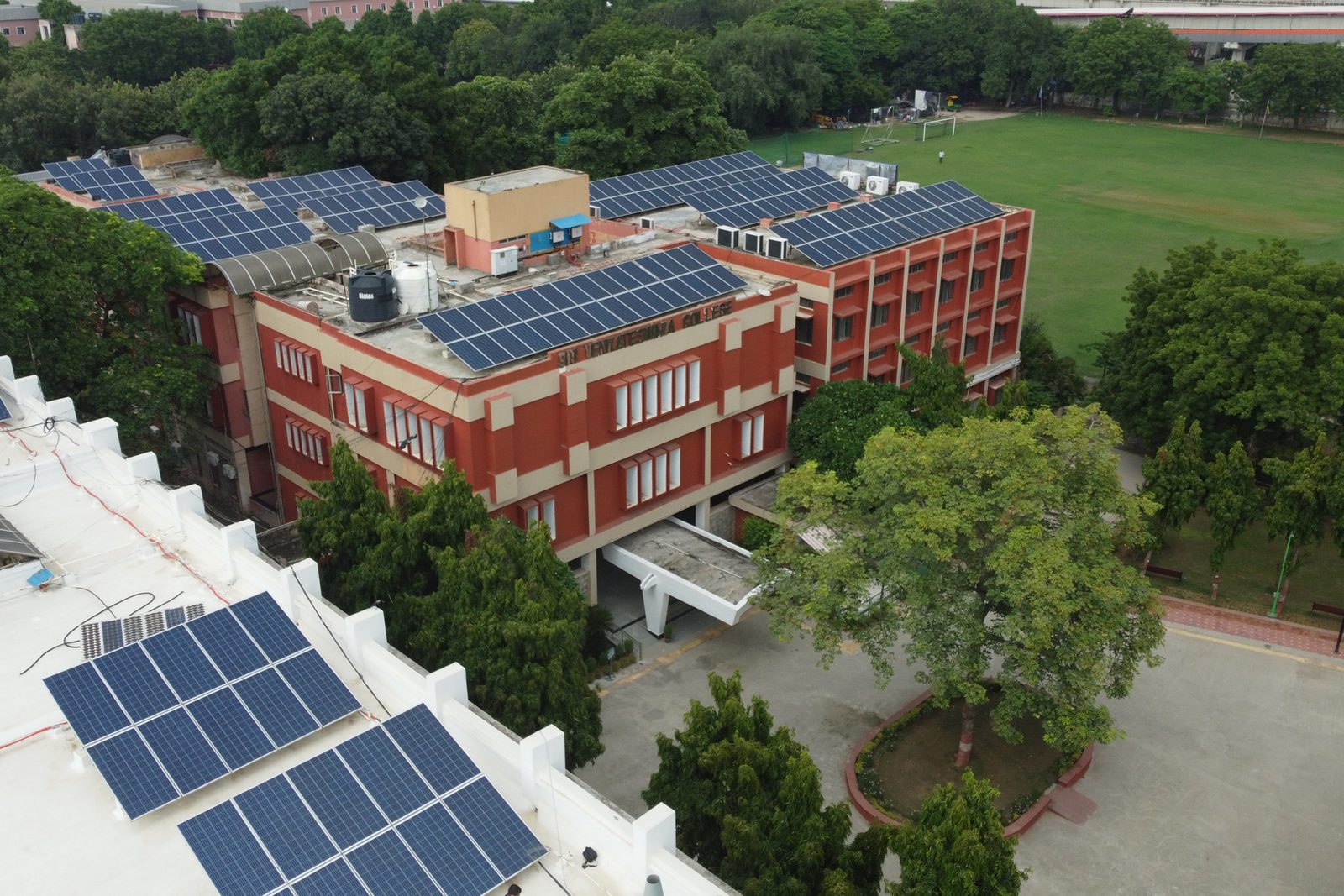
Everything at Sri Venkateswara College sits on a single campus plot at Dhaula Kuan, the academic blocks, laboratories, library and playing fields together rather than scattered across the city. Its library holds over 1,20,000 books alongside journals and a periodicals section, and the college runs ICT-enabled laboratories, an 800-seat auditorium and a seminar hall for departmental events. The standout facility is the Bioinformatics Centre, set up in 2006 as the first undergraduate-focused centre of its kind in Delhi University, which anchors its computational-biology teaching. Outdoor sport is served by a cricket field that hosts district-level fixtures, along with tennis and basketball courts.
Hostel
Residential capacity is tight, so plan for it early. The college opened an on-campus hostel in 2008, and it runs as two blocks holding 144 students in all, a small number against the college's total enrolment. Most students, especially those already in the Delhi-NCR region, therefore commute or arrange private accommodation nearby. Allotment is need-and-merit based, and the current intake and charges are on the college website; if you are counting on a hostel seat, confirm it before you accept admission.
Faculty
The college is led by its principal, Prof. Vajala Ravi, with permanent and ad-hoc teachers appointed under University of Delhi service rules. It is this faculty's research output, in the sciences especially, that lifts the college's NIRF research score above its other parameters. A precise teacher count for a given year is best taken from the NIRF data report the college files, which lists its sanctioned and filled teaching posts.
Notable Alumni
Alumni, known on campus as "Venkyites", span sport, cinema, music and public life. Cricketers Rishabh Pant and Ayush Badoni studied here, as did chess grandmaster Tania Sachdev and Paralympic javelin gold medallist Navdeep Singh. From public life the roll includes Union minister Jayant Chaudhary and army officer and Maha Vir Chakra awardee Sonam Wangchuk, and from the screen, television host Gaurav Kapur along with several actors and singers.
News & Articles
The college's own website carries its live notices and events; its most visible recent fixture is iFair, the annual industry-interaction and placement drive that brings recruiters onto campus. The admission-season documents, the seat notice, category fee sheets and the prospectus, are posted there ahead of each CSAS cycle, which is where a dated deadline should be checked.
College Compare
The honest way to place Sri Venkateswara College is by what its own numbers say rather than a single rank. Its clear edge is research, the highest of its five NIRF parameters and strong for any undergraduate college, so a research-minded science applicant gets more here than the overall standing suggests. Its soft spot is perception, well below its teaching and research scores, so weighed against an older, higher-profile DU college you are trading measured academic strength on one side for brand recall on the other. Which of those matters more comes down to your course and what you want the degree to do.
Contact & Location
The campus is on Benito Juarez Road, Dhaula Kuan, in south-west Delhi, a short distance from the Dhaula Kuan and Durgabai Deshmukh South Campus corridor. The college office can be reached at +91-11-2411-2196, general and principal correspondence goes to principal@svc.ac.in, and admission queries to admission@svc.ac.in. Full department contacts and current notices are on the college website.
Verified
Approvals & Accreditation
Statutory approvals and accreditation grades from official bodies.
Aid
Scholarships
Decide
Compare with similar colleges
Voices
Student Reviews
Campus
Gallery
Questions
Frequently asked questions
References
Sources
- Tirumala Tirupati Devasthanams – en.wikipedia.org
- NIRF 2025 ranking – nirfindia.org
- Official website – svc.ac.in
- admission office – admission.uod.ac.in
At a glance
Quick facts
- Established
- 1961
- Affiliation
- University of Delhi
- NIRF 2025 (College)
- Rank #11NIRF· 2025-08-14
- NAAC
- A+, CGPA 3.44
- Website
- svc.ac.in

Expertie Editorial Team
This page is researched and maintained by the Expertie editorial team, and checked against official sources.
Found something that looks wrong? Email us at editorial@expertie.com.
Last updated